How Stable Should a Peristaltic Pump Flow Rate Be?
Author
Date Published
Reading Time
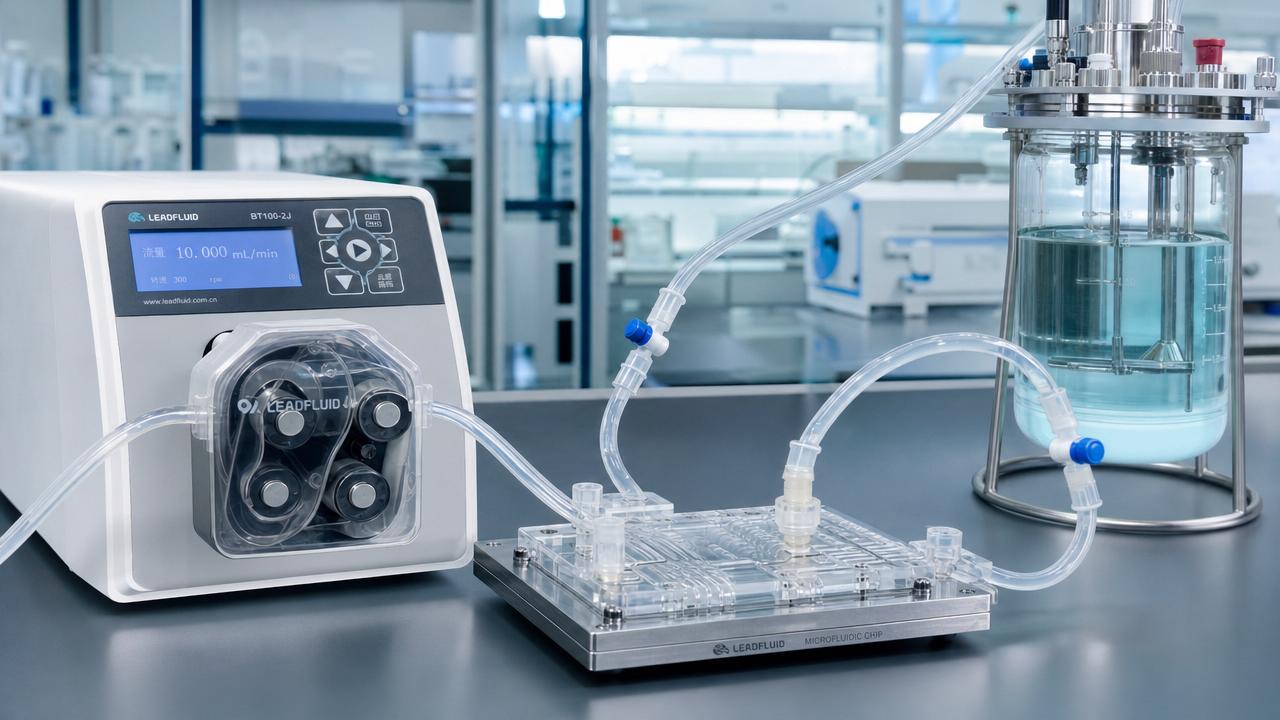
Peristaltic pump flow rate stability is a critical factor in lab-scale production, microfluidics, and regulated bioprocess workflows where even minor fluctuations can affect yield, dosing accuracy, and data reliability. For teams evaluating precision fluid-handling systems, understanding how stable a peristaltic pump flow rate should be helps connect experimental consistency with scale-up readiness, compliance demands, and long-term process control.
How stable should a peristaltic pump flow rate be in real operating conditions?
The practical answer is that stability should be defined by process risk, not by a single generic number. In routine transfer, a moderate flow variation may be acceptable. In cell culture feeding, microreactor dosing, reagent metering, or time-sensitive chemical addition, much tighter control is required. The key point for information-stage buyers is this: peristaltic pump flow rate stability must be judged against the sensitivity of the fluidic process, the tubing behavior, and the consequences of deviation.
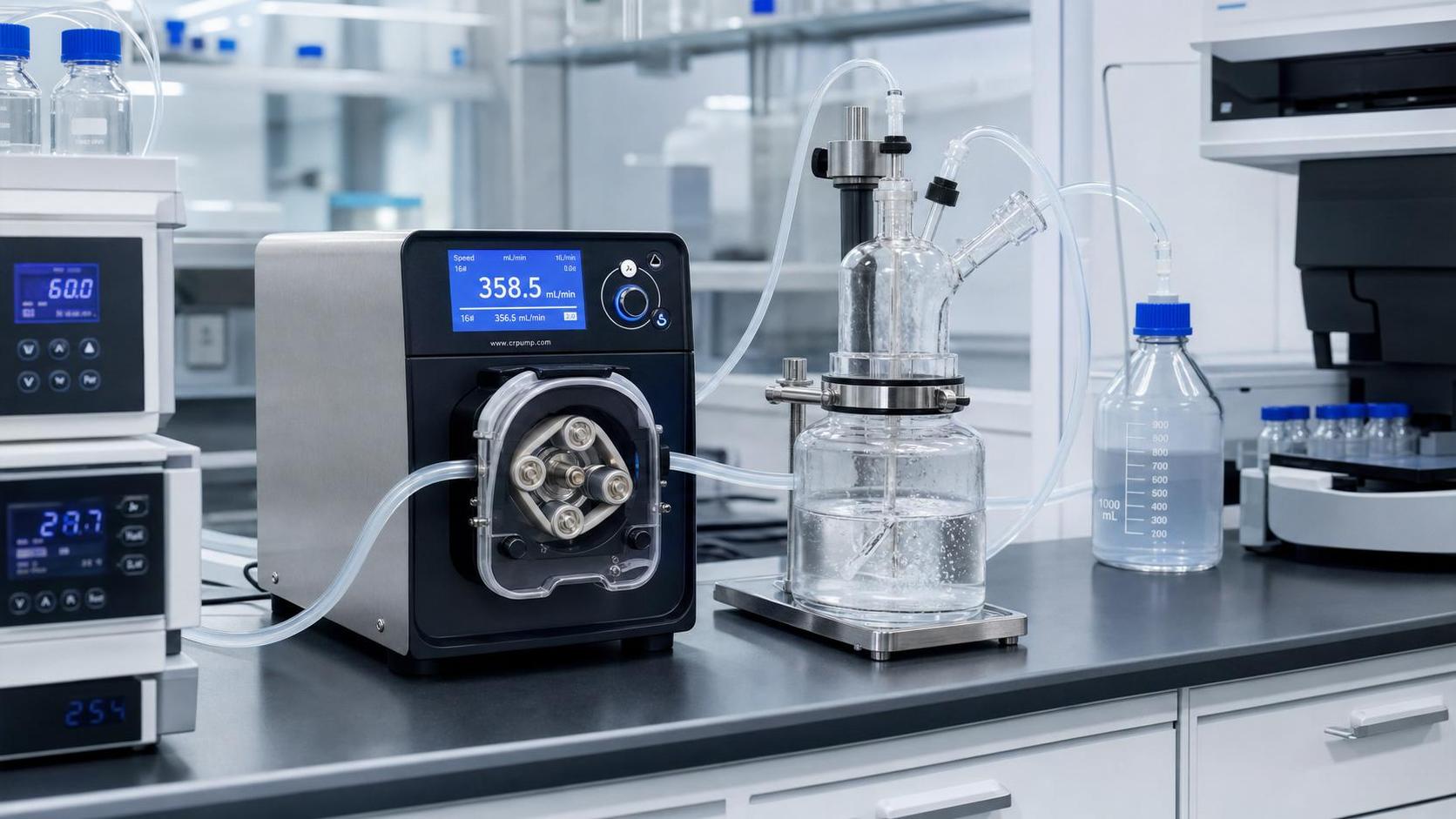
Peristaltic pumps do not produce perfectly continuous flow in the same way as some syringe or gear-based systems. Their pumping principle introduces pulsation because rollers compress and release flexible tubing. That does not make them unsuitable. It means procurement and engineering teams must distinguish between average flow accuracy, short-term pulsation, repeatability over time, and long-run drift as tubing ages.
For lab directors and bioprocess engineers moving from benchtop experiments toward scalable manufacturing, a stable flow rate is usually one that supports reproducible outcomes across batches, maintains acceptable process windows, and can be documented with confidence. At G-LSP, that evaluation is treated as a benchmarking question rather than a marketing claim: how does the pump behave under realistic viscosity, back-pressure, duty cycle, sterility, and compliance constraints?
- If the process is tolerant, stability may be defined mainly by average delivered volume over time.
- If the process is sensitive, stability must include instantaneous flow smoothness, repeatability, and startup consistency.
- If the process is regulated, documented verification and traceable performance testing become as important as the pump hardware itself.
A useful way to define stability
When assessing peristaltic pump flow rate stability, many teams benefit from separating four metrics: average flow accuracy, repeatability between runs, pulsation amplitude within a run, and drift during extended operation. A pump can perform well in one metric while underperforming in another. This distinction is especially important in multidisciplinary environments where chemistry, bioprocessing, and microfluidics share procurement budgets but not the same tolerance limits.
Which factors most affect peristaltic pump flow rate stability?
The biggest mistake in pump selection is assuming the drive alone determines stability. In practice, tubing is often the dominant variable. Material elasticity, wall thickness, fatigue resistance, chemical compatibility, and compression set all influence flow consistency. A well-designed pump head cannot fully compensate for poor tubing selection or an operating point outside the tubing’s optimal range.
The second major factor is process setup. Suction lift, discharge back-pressure, fluid viscosity, temperature, and the presence of gas bubbles all change delivered flow. Teams comparing pump datasheets without reproducing process conditions often overestimate real-world peristaltic pump flow rate stability. That is why cross-platform benchmarking matters in environments where lab decisions affect pilot or GMP-adjacent workflows later.
The table below summarizes the variables most likely to alter stability and what decision-makers should verify before purchase or qualification.
For procurement officers, this table highlights why low-price comparisons are often misleading. Two systems may claim the same nominal flow range, yet deliver very different peristaltic pump flow rate stability once tubing fatigue, back-pressure, and process temperature are introduced. A benchmarking approach reduces the risk of selecting hardware that performs well only in ideal conditions.
Why tubing lifecycle matters more than many teams expect
In continuous or semi-continuous use, tubing wear is not just a maintenance issue. It is a stability issue. As tubing loses elasticity, the delivered volume per revolution can drift. In regulated environments, that drift may trigger recalibration, batch record concerns, or product quality investigations. G-LSP’s fluidic-precision perspective is especially valuable here because it connects component-level degradation to process-scale consequences.
What level of stability is reasonable for different applications?
There is no universal threshold, but there are useful decision bands. Information-stage buyers often need a practical translation from engineering language to application fit. The goal is not to chase the tightest possible specification. The goal is to define whether the observed peristaltic pump flow rate stability is sufficient for your process economics, analytical confidence, and compliance burden.
The following table gives a general application-oriented view. Actual acceptance criteria should always be verified through process-specific testing.
This application view helps avoid overbuying and under-specifying at the same time. A system suitable for wash transfer may not support sensitive cell culture feeds. Likewise, a very high-precision low-flow setup may not be the most cost-effective answer for bulk utility dosing. The right level of peristaltic pump flow rate stability is always contextual.
Peristaltic pump vs. other fluid-delivery options: when does stability become the deciding factor?
A recurring procurement question is whether a peristaltic pump is the best architecture at all. The answer depends on whether your priority is contamination control, disposable flow path, maintenance simplicity, flow smoothness, or fine-dose precision. Peristaltic technology is often preferred because the fluid contacts only the tubing, which simplifies sterility strategy and chemical changeover. Still, where ultra-low pulsation is critical, alternative technologies may deserve review.
- Choose peristaltic pumping when disposable flow paths, containment, and service simplicity are high priorities.
- Consider syringe-based delivery for very low-flow, highly metered dosing where stroke planning fits the workflow.
- Review gear or diaphragm options when pressure demands, pulse profile, or fluid rheology create instability beyond acceptable limits.
For organizations spanning reactors, microfluidic devices, bioreactors, centrifugation-adjacent dosing, and automated liquid handling, cross-technology comparison is essential. G-LSP’s advantage lies in framing pump selection within the broader architecture of micro-efficiency, where fluid-handling performance is evaluated in relation to scale-up path, validation burden, and total workflow fit.
When stability concerns point to system redesign
Sometimes the pump is not the real problem. Excessive tubing length, poorly placed filters, trapped air, unstable suction conditions, or a control loop with delayed feedback can all create apparent instability. Before replacing hardware, engineering teams should examine the whole fluid path. This approach frequently improves peristaltic pump flow rate stability without forcing an immediate technology change.
How should buyers evaluate specifications, testing methods, and procurement risk?
Datasheets are helpful, but they rarely answer the most important purchasing question: how stable will this pump be in our exact use case? Information-stage buyers should therefore request test conditions, not just numbers. A flow specification without tubing details, fluid viscosity, pressure conditions, calibration method, and test duration provides limited decision value.
A disciplined evaluation process can shorten selection time and reduce costly requalification later. This is especially relevant when delivery deadlines are tight, budgets are controlled, and internal stakeholders need to align across R&D, engineering, quality, and procurement.
- Define the real operating window, including minimum and maximum flow, fluid properties, pressure profile, duty cycle, and sterility requirements.
- Separate must-have metrics from nice-to-have metrics. For example, long-run repeatability may matter more than short-term pulse shape in some feeds.
- Ask suppliers how peristaltic pump flow rate stability was measured and whether representative process testing is available.
- Review tubing sourcing, replacement intervals, and whether dimensional variation between lots could affect calibration consistency.
- Confirm integration requirements such as analog control, digital interfaces, alarm outputs, or data logging for regulated workflows.
The table below can be used as a procurement checklist for comparing options in a structured way.
This type of structured comparison is useful because the best choice is rarely the one with the longest feature list. It is the one with the most reliable match between claimed and verified peristaltic pump flow rate stability in your operating context.
What standards, validation, and documentation should regulated teams consider?
In pharmaceutical, chemical, and advanced lab environments, stability is not only a process question but also a documentation question. If a pump supports material transfer linked to product quality, analytical integrity, or critical process parameters, teams may need evidence that the system can be calibrated, maintained, and verified in a controlled manner.
Common reference points include ISO-based quality systems, USP-relevant material considerations for fluid paths, and GMP-oriented expectations for equipment control, traceability, and change management. Not every lab pump requires the same documentation depth, but the need increases quickly when the workflow moves from exploratory research toward pilot, clinical, or production-adjacent use.
- Confirm whether tubing and wetted-path materials can be linked to the documentation standards your quality team expects.
- Determine how calibration is performed, how often it should be repeated, and how drift is recorded over time.
- Review whether the equipment can be integrated into validation protocols without creating excessive documentation overhead.
G-LSP supports these decisions by benchmarking hardware from a technical and regulatory perspective. That matters when the same organization must satisfy scientists demanding flexibility, engineers demanding robustness, and quality teams demanding traceability.
Common misconceptions about peristaltic pump flow rate stability
“If the average flow is correct, the pump is stable enough.”
Not always. Some applications respond to short-term fluctuations even if the long-run average appears acceptable. This is common in low-volume dosing, sensor-coupled systems, and mixing-limited microenvironments.
“A premium drive guarantees stable flow regardless of tubing.”
No. Tubing selection, installation consistency, and wear profile often dominate the actual outcome. Ignoring tubing quality can undermine even a strong pump platform.
“Peristaltic pumps are unsuitable for precision work.”
That is too broad. Many precision workflows use peristaltic systems successfully when the flow range, tubing type, damping strategy, and calibration plan are chosen correctly. The right question is not whether the technology is precise in theory, but whether the achieved peristaltic pump flow rate stability matches the process requirement.
FAQ for researchers, engineers, and procurement teams
How do I know if flow pulsation is a real problem in my process?
Start by looking at process sensitivity rather than pump architecture alone. If your application involves low-flow dosing, narrow residence times, fragile cells, or tightly controlled reagent ratios, pulsation may affect outcomes. A short feasibility test with representative fluid, downstream restriction, and actual operating speed is far more informative than a nominal specification.
Can peristaltic pump flow rate stability be improved without changing the pump?
Often yes. Teams can improve stability by shortening tubing runs, removing trapped gas, optimizing suction conditions, using more suitable tubing, recalibrating at the actual process temperature, and reviewing whether pulse dampening or control-loop tuning is needed. System design frequently matters as much as the base hardware.
What should procurement focus on when multiple departments use the same pump family?
Prioritize flexibility with discipline. Look for a platform that supports different tubing sets, documented calibration procedures, and integration options, but also create an internal rule set for which applications require tighter verification. A shared platform works best when use cases are segmented by risk rather than treated as identical.
Is there a point where a peristaltic pump is the wrong choice?
Yes. If your process demands extremely smooth continuous flow at very low rates, very high pressure capability, or fluid conditions that rapidly damage tubing, another pump type may be more appropriate. The right decision is not about loyalty to one technology. It is about reliable process fit.
Why work with G-LSP when evaluating fluidic precision and scale-up readiness?
Teams researching peristaltic pump flow rate stability rarely need a pump in isolation. They need confidence that a fluid-handling choice will support reactor dosing, microfluidic reproducibility, cell culture consistency, or laboratory automation without creating hidden scale-up or compliance problems later. That is where G-LSP adds value.
Because G-LSP is built around five industrial pillars spanning pilot-scale reactors, precision microfluidic devices, bioreactors and cell culture infrastructure, centrifugation and separation technology, and automated pipetting and liquid handling systems, the evaluation goes beyond catalog comparison. It connects pump behavior to the full architecture of lab-scale production and fluidic precision.
- We help clarify which flow stability metrics actually matter for your application, instead of relying on oversimplified specifications.
- We support parameter confirmation across flow range, tubing choice, process fluid behavior, and expected duty cycle.
- We assist with product selection discussions linked to scale-up plans, documentation needs, and procurement timelines.
- We can frame conversations around delivery lead time, customization scope, sample or evaluation support, and certification-related expectations.
If your team is comparing options, defining acceptable peristaltic pump flow rate stability, or preparing a transition from lab validation to broader deployment, contact G-LSP for a more structured review. You can discuss parameter confirmation, product fit, tubing strategy, compliance documentation expectations, delivery planning, and quotation alignment based on your actual process rather than generic assumptions.
Expert Insights

Chief Security Architect
Dr. Thorne specializes in the intersection of structural engineering and digital resilience. He has advised three G7 governments on industrial infrastructure security.
Related Analysis
Core Sector // 01
Security & Safety
- China Tightens Export Compliance Checks on Lab Fluid-Control DevicesAuthor :Dr. Aris Nano

- China Tightens Export Checks on Lab Fluid DevicesAuthor :Dr. Aris Nano

- China Customs Tightens Export Checks for Lab Liquid-Handling EquipmentAuthor :Dr. Aris Nano

- ECHA SVHC Update Reaches Precision Fluid DevicesAuthor :Dr. Aris Nano

- FDA Tightens Accuracy Rule for Lab Fluid DevicesAuthor :Dr. Aris Nano

- ECHA Adds 12 SVHCs Affecting Lab Fluid DevicesAuthor :Dr. Aris Nano

- How to Choose a Variable Speed Peristaltic Pump for Accurate Lab Fluid TransferAuthor :Dr. Aris Nano

- FDA Tightens Import Rules for Syringe PumpsAuthor :Dr. Aris Nano