Automated Washer Residual Volume Data and Cleaning Risk
Author
Date Published
Reading Time
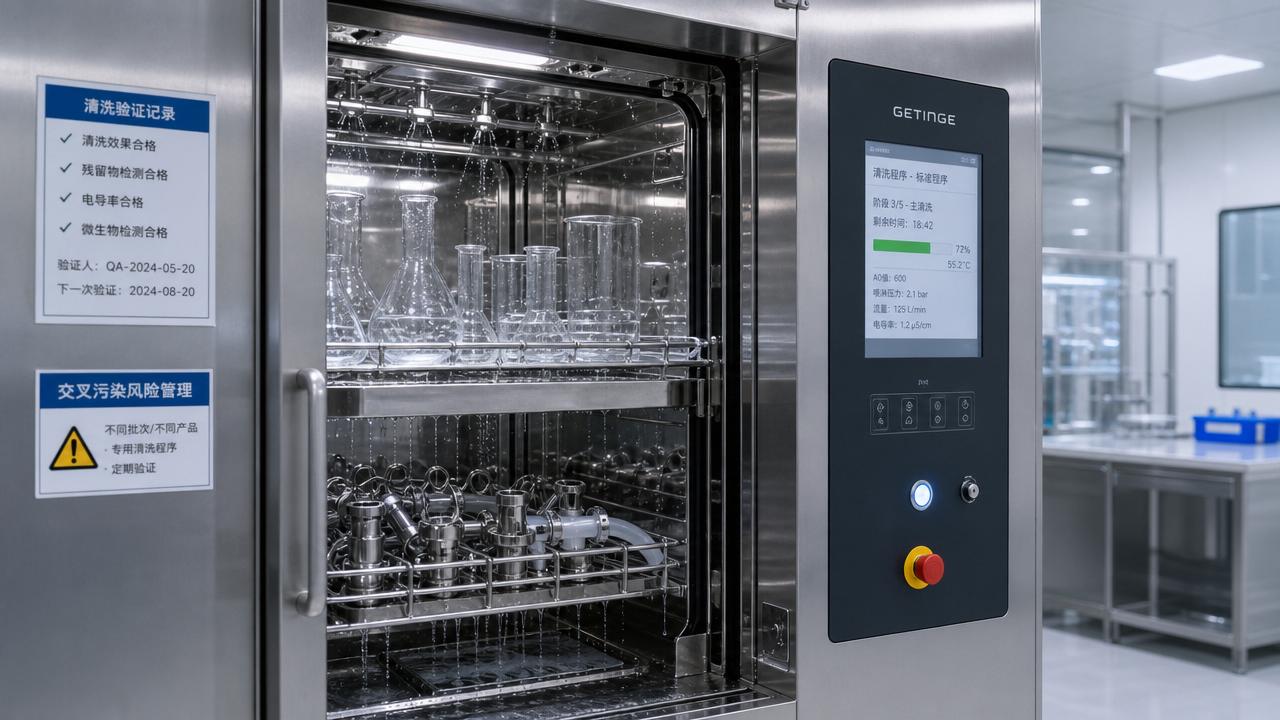
For quality control and safety teams, automated washer residual volume data is more than a performance metric—it is a direct indicator of cleaning risk, cross-contamination potential, and process reliability. In highly regulated lab and production environments, understanding how residual volume affects validation, compliance, and product integrity is essential for making informed equipment and cleaning decisions.
Why Scenario Differences Matter More Than a Single Performance Claim
Many buyers first encounter automated washer residual volume data in a specification sheet, a factory acceptance test, or a validation discussion. The mistake is assuming one residual volume figure applies equally across all use conditions. In reality, the same washer can present very different cleaning risk profiles depending on vessel geometry, fluid chemistry, cycle design, loading pattern, and downstream sensitivity.
For quality control teams, the issue is whether the remaining liquid after wash and drain can compromise test reliability or release criteria. For safety managers, the concern expands to operator exposure, chemical incompatibility, hazardous residue retention, and the possibility of reactive carryover. This is why automated washer residual volume data should always be interpreted within a use scenario, not as an isolated benchmark.
Within global pharmaceutical, chemical, and advanced laboratory environments, scenario-based interpretation is especially important when organizations move from batch workflows to semi-continuous or highly scheduled operations. A low nominal residual volume may still be unacceptable if the process handles potent compounds, proteinaceous materials, surfactant-heavy formulations, or solvent systems that change drain behavior.
Where Automated Washer Residual Volume Data Commonly Becomes a Decision Trigger
In practice, automated washer residual volume data becomes critical in several business scenarios. Each one has a different definition of acceptable risk and a different threshold for action.
1. QC laboratories with frequent method changes
Labs that switch between analytical batches, reference materials, cleaning agents, and sample matrices need confidence that residual liquid does not affect subsequent testing. Here, even a small trapped volume in racks, tubing, nozzles, or glassware contours can distort trace analysis, conductivity readings, or bioburden outcomes.
2. Multiproduct production support areas
Facilities supporting multiple products often use washers to process reusable parts, small vessels, transfer tools, and fluid-contact accessories. In this scenario, automated washer residual volume data directly informs cross-product contamination risk, especially when campaign changeovers are tight and cleaning windows are compressed.
3. Potent compound or hazardous chemistry environments
For occupational safety teams, residual volume is not only about cleanliness; it is also about retained hazard. If wash liquid carrying active compounds, corrosives, or toxic residues remains in inaccessible zones, then drain-down performance becomes part of exposure control. In such cases, automated washer residual volume data should be reviewed alongside containment strategy and wastewater handling rules.
4. Cell culture, biotech, and sensitive biologics workflows
Biological materials can adhere differently from simple salts or solvents. Proteins, lipids, and media residues may cling to surfaces and remain protected in droplets or films. This means residual volume can translate into biological persistence, endotoxin concern, or false confidence in rinse effectiveness.
Scenario Comparison: What Different Teams Should Evaluate
The table below shows how the same automated washer residual volume data may lead to different decisions depending on operating context.
How Cleaning Risk Changes Across Real Operating Scenarios
The most useful way to read automated washer residual volume data is to connect it to actual risk pathways. A residual droplet only becomes a serious issue when it can alter quality, safety, or compliance outcomes. The following scenario differences are where that conversion usually happens.
High-throughput operations versus low-frequency specialty cleaning
In high-throughput environments, small residual volume deviations accumulate into larger process variability. A washer that performs acceptably for occasional use may become unstable under dense scheduling, mixed loads, and shortened cooling or drain intervals. By contrast, in lower-frequency specialty cleaning, the bigger concern is often unusual item geometry or difficult residue chemistry rather than throughput itself.
Simple aqueous residues versus sticky or surface-active residues
Automated washer residual volume data generated with water-like test conditions may not predict performance with buffers, sugars, oils, proteins, or surfactant-containing solutions. These materials alter wetting, film formation, and drainage. Quality teams should therefore ask whether the reported data comes from realistic worst-case loads or only idealized rinse tests.
Open, drainable parts versus complex geometries
A washer can show excellent residual volume results on simple glassware yet struggle with narrow channels, blind pockets, valves, manifolds, or fittings. In fluidic-precision environments, geometry is often the hidden driver of cleaning risk. This is where loading fixtures, nozzle mapping, and orientation control matter as much as the wash chamber itself.
What Quality and Safety Teams Should Look for in the Data
Not all automated washer residual volume data is equally decision-ready. Teams should distinguish between marketing-friendly values and validation-relevant evidence. A useful data package should answer five practical questions.
- Was the residual volume measured by item type, load pattern, and orientation?
- Were difficult residues or representative process fluids included?
- How stable were the results across repeated cycles and different operators?
- Is the data linked to final rinse quality, conductivity, TOC, or residue-specific acceptance criteria?
- Can the washer maintain the same drain performance after maintenance intervals, accessory changes, or scale-up of use?
For organizations working with GMP, ISO-aligned internal systems, or strict audit readiness, automated washer residual volume data should be traceable to a documented test method. It is most valuable when combined with cleaning validation logic rather than treated as a standalone engineering number.
Common Misjudgments by Scenario
Several repeated mistakes appear when companies assess cleaning risk too quickly.
Assuming low residual volume always means low contamination risk
A small residual liquid amount does not automatically guarantee safe cleaning. If the retained fluid contains highly potent residue, incompatible detergent, or concentrated active material, then even low measured volume may still exceed acceptable limits.
Ignoring accessories and load fixtures
Spray arms, baskets, tubing supports, and inserts can create hidden retention zones. Buyers often review chamber-level automated washer residual volume data but overlook the effect of optional fixtures that are necessary in real use.
Treating one validation case as universal
A successful cleaning study on one family of items does not automatically justify broader application. Different product-contact surfaces, drying behavior, and drainage profiles may require separate risk evaluation.
Scenario-Based Selection Guidance for Procurement and Technical Review
For procurement officers, lab directors, and engineering reviewers, the best selection process starts with use segmentation. Instead of asking for the lowest possible residual number, ask which washer architecture best fits your cleaning reality.
How G-LSP Supports Better Interpretation of Automated Washer Residual Volume Data
For decision-makers navigating lab-scale production, precision fluidics, and regulated cleaning workflows, the challenge is rarely access to data alone. The challenge is comparing data that was generated under different assumptions. G-LSP addresses this by framing equipment evaluation around fluidic precision, benchmark consistency, and real transition points between benchtop use and industrial relevance.
That matters because automated washer residual volume data is most useful when interpreted beside adjacent variables: nozzle coverage, chamber hydraulics, material compatibility, accessory design, repeatability under scale of use, and the compliance expectations attached to the specific workflow. For quality control and safety teams, this broader benchmarking view reduces the risk of over-trusting generic vendor claims.
FAQ: Practical Questions Teams Ask Before Approval
Is lower residual volume always better?
Usually yes, but only when measured under relevant conditions. A low figure from an unrealistic test may be less useful than a slightly higher figure backed by robust, repeatable, scenario-specific validation.
When should a team reject automated washer residual volume data as insufficient?
Reject or challenge it when the test method is unclear, the load configuration is unrepresentative, only ideal fluids were used, or no link exists to residue acceptance criteria and cleaning validation strategy.
Who should review the data internally?
At minimum, quality, safety, process engineering, and end users should review it together. Residual volume affects compliance, workflow practicality, hazard control, and maintenance behavior at the same time.
Final Takeaway: Match the Data to the Risk Scenario
Automated washer residual volume data becomes truly valuable when it is used as a scenario-based risk tool rather than a simple performance label. For QC personnel, it helps determine whether cleaning outcomes are reliable enough for sensitive analytical or production-support use. For safety managers, it reveals where retained liquid may create exposure, reactivity, or compliance concerns. For procurement and technical stakeholders, it provides a concrete basis for comparing washer designs beyond headline specifications.
If your organization is evaluating washers for multiproduct labs, hazardous chemistry handling, biologics support, or tightly validated cleaning programs, start by mapping your actual use cases. Then request automated washer residual volume data that reflects those exact conditions. That is the most practical path to reducing cleaning risk, protecting product integrity, and selecting equipment that remains defensible under audit, scale-up, and daily operation.
Expert Insights

Chief Security Architect
Dr. Thorne specializes in the intersection of structural engineering and digital resilience. He has advised three G7 governments on industrial infrastructure security.
Related Analysis
Core Sector // 01
Security & Safety
- Testing Dilution Factor Precision and Repeatability in Automated Liquid HandlingAuthor :Lina Cloud

- How to Assess a European Liquid Handling Software Supplier for Lab AutomationAuthor :Lina Cloud

- Pipette Tip Fit for Automation: Checking Deck, Gripper, and Seal CompatibilityAuthor :Lina Cloud

- How to Evaluate an Automated Sample Dilutor Factory for Traceable Lab WorkflowsAuthor :Lina Cloud

- What Drives Liquid Handling Software Costs in Automated Laboratory Workflows?Author :Lina Cloud

- What to Verify in Validated Liquid Handling Software for GxP WorkflowsAuthor :Lina Cloud

- Selecting Automated Liquid Handling Systems for High-Throughput AssaysAuthor :Lina Cloud

- How to Validate Lab Automation Standards for Reliable, Compliant WorkflowsAuthor :Lina Cloud