Liquid Handling Software OEM: Where Integration Costs Hide
Author
Date Published
Reading Time
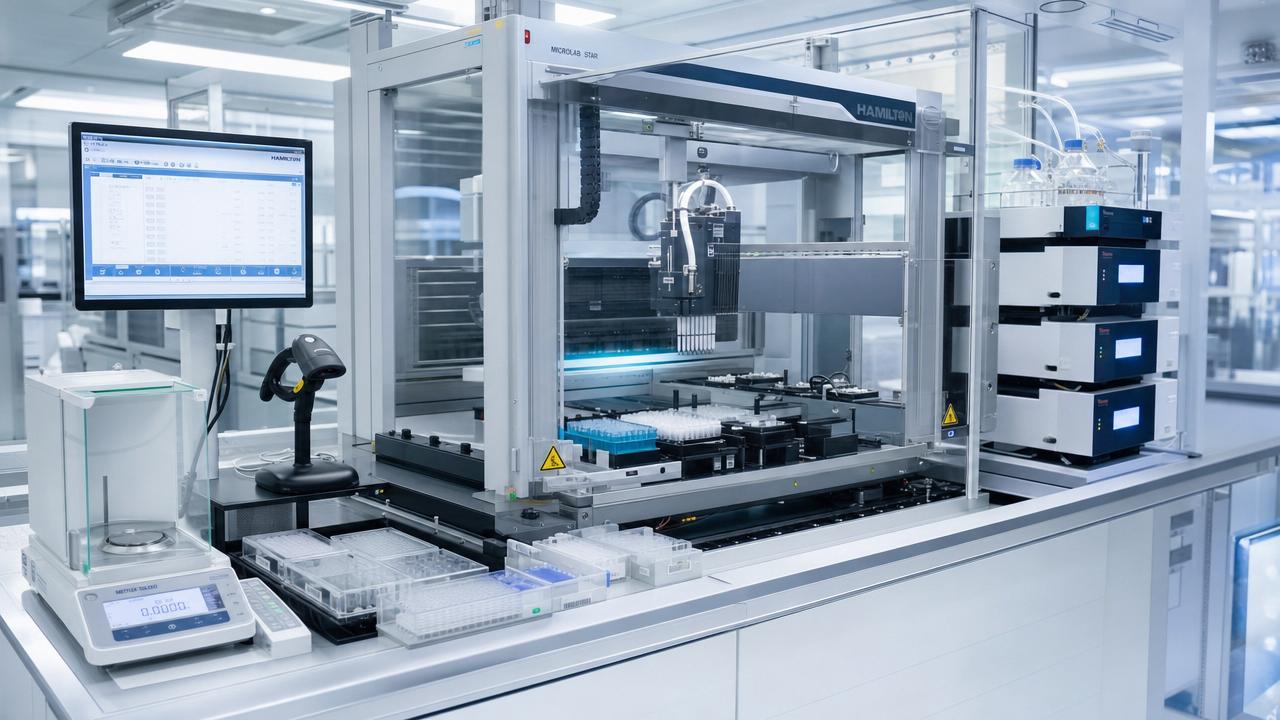
Choosing a liquid handling software OEM often looks straightforward—until hidden integration costs emerge across validation, instrument compatibility, data workflows, and long-term support. For enterprise buyers in regulated lab and production environments, these overlooked factors can delay scale-up and erode ROI. This article examines where costs typically hide and how to evaluate OEM partnerships with greater technical and commercial precision.
Why do hidden costs appear in a liquid handling software OEM project?
For many procurement teams, the visible quote covers licenses, deployment, and basic training. The real spend often begins after purchase. A liquid handling software OEM program must connect instruments, user permissions, audit trails, recipes, laboratory information systems, and validation documents. In regulated environments, every mismatch between software logic and physical workflow creates rework.
This is especially relevant for global pharmaceutical, chemical, and advanced life science organizations moving from lab-scale experimentation to pilot and production transfer. G-LSP focuses on this exact transition zone. Its benchmarking perspective is useful because integration problems rarely stay inside one workstation. They spread into batch release timing, method transfer, fluidic accuracy, and change control.
- Software may support the instrument in principle, but not the exact firmware version or peripheral combination used in your site.
- A quoted API connection may exclude workflow mapping, exception handling, or data normalization for downstream systems.
- Validation packages may stop at generic documentation, leaving your internal QA team to complete protocol adaptation and evidence gathering.
- Support fees may rise when your process expands from one automated pipetting cell to a multi-instrument fluidic platform.
In short, the hidden cost is not only technical. It is organizational. When a liquid handling software OEM partner underestimates integration depth, enterprise buyers pay through delays, additional engineering, and fragmented accountability.
Where enterprise buyers usually underestimate scope
Decision-makers often compare vendors on license cost and interface appearance. Yet integration effort is driven more by workflow complexity, compliance expectations, and instrument diversity than by software screens. The more a lab operates across bioprocessing, microfluidics, sample prep, and scale-up studies, the more these factors matter.
Which integration layers drive the true cost of a liquid handling software OEM?
To control budget risk, procurement teams should separate software integration into distinct cost layers. This prevents suppliers from bundling vague promises into a single line item. The table below summarizes where a liquid handling software OEM project typically accumulates cost beyond the base proposal.
This breakdown shows why a low entry price can be misleading. In many cases, the software itself is not the main cost driver. The expensive part is making the software behave predictably across regulated, high-precision, multi-device workflows.
The cost of revalidation after small changes
A common blind spot is the cost of change after go-live. Swapping a pump, updating firmware, changing a barcode schema, or adding a new assay can trigger documentation updates and partial requalification. For labs handling sensitive R&D-to-production transitions, this is not a minor inconvenience. It can affect release timing, comparability, and internal quality review load.
How should decision-makers compare OEM models before signing?
Not every liquid handling software OEM relationship follows the same commercial and technical model. Some suppliers provide tightly bundled software with limited openness. Others emphasize integration flexibility but require more customer-side engineering. Enterprise buyers should compare models using operational criteria, not sales language.
The following comparison helps procurement, engineering, and quality teams evaluate trade-offs more realistically.
There is no universal winner. The right choice depends on whether your priority is rapid bench deployment, regulated scale-up, or cross-site digital standardization. G-LSP’s benchmarking lens is valuable here because it looks beyond software labels and focuses on the architecture of micro-efficiency across the full fluidic workflow.
Questions procurement should ask early
- Which instruments, firmware versions, and accessories are supported today, not merely planned?
- What part of validation is included, and what remains the customer’s responsibility?
- How are failed runs, interrupted transfers, and data exceptions logged and recovered?
- What happens commercially when a new assay family or site is added within 12 to 24 months?
What technical and compliance factors matter most in regulated environments?
For enterprise buyers in pharma, chemicals, and advanced biologics, a liquid handling software OEM must be evaluated as part of a controlled process environment, not a standalone IT tool. Precision dispensing, traceability, and reproducibility have direct quality and business implications.
Core technical checkpoints
- Support for volumetric accuracy monitoring and method-level parameter control, especially when sub-microliter handling affects assay integrity.
- Robust user access control, electronic records management, and audit logging suitable for internal quality review.
- Workflow portability between development, pilot, and production-support labs without recreating methods from scratch.
- Version control for protocols, templates, and hardware configuration to reduce undocumented drift.
Relevant standards context
While exact requirements depend on process use, buyers often review alignment with GMP expectations, data integrity principles, and frameworks such as 21 CFR Part 11 for electronic records and signatures when applicable. In organizations with international operations, ISO-referenced quality systems and USP-linked method consistency may also shape acceptance criteria.
G-LSP’s value in this stage is practical benchmarking. It helps teams compare hardware-software combinations against fluidic precision and regulatory expectations, reducing the risk of selecting a software layer that looks adequate in demo conditions but fails under real validation pressure.
Which use cases make hidden OEM integration costs most visible?
The impact of a liquid handling software OEM decision changes by workflow. Hidden costs are easiest to detect when process variability, sample traceability, or scale-up demands are high. The scenarios below are common in multidisciplinary lab operations.
These examples show why enterprise buyers should evaluate OEM software in the context of the full lab-to-production architecture. G-LSP’s cross-pillar knowledge—covering reactors, microfluidics, bioreactors, separation, and automated pipetting—supports this broader view.
How can buyers reduce total cost before implementation starts?
Cost control begins before contract signature. The best way to lower total spend is to force clarity around scope, interfaces, and acceptance criteria. A liquid handling software OEM project becomes expensive when assumptions stay undocumented.
A practical procurement checklist
- Define the workflow boundary. State whether the software must manage only liquid handling steps or also peripheral devices, data export, review, and exception closure.
- List exact instruments and versions. Include firmware, accessories, and any third-party modules that could affect compatibility.
- Specify validation deliverables. Clarify which documents, test scripts, trace matrices, and support hours are part of the supplier package.
- Request a change-cost model. Ask how pricing works for additional methods, sites, user tiers, instrument expansions, and software updates.
- Align IT and QA early. Security review and quality review should not begin after engineering design is complete.
This approach turns a liquid handling software OEM purchase from a generic software buy into a governed technical investment. It also helps cross-functional teams compare bids on equal terms instead of reacting to incomplete proposals.
Common misconceptions about liquid handling software OEM selection
“If the instrument works, the software layer is low risk”
This is rarely true in enterprise settings. Hardware performance does not automatically guarantee stable permissions, traceability, recipe governance, or clean data handoff. Integration risk lives in the interactions between systems.
“Validation documents from the OEM solve compliance”
Supplier templates are useful, but they are not a substitute for site-specific validation logic. Internal intended use, risk classification, user management, and change control still need to be reflected in your own quality system.
“A lower software quote means lower project cost”
A low initial quote can shift expense into customization, support tickets, engineering workshops, and revalidation activities. Total cost of ownership is driven by architecture fit, not just purchase price.
FAQ: what do enterprise buyers ask most often?
How do we know whether a liquid handling software OEM is suitable for scale-up?
Look for method portability, traceability depth, compatibility with adjacent systems, and a realistic change-management model. If the platform works only as a standalone lab tool, it may struggle when your operation moves toward pilot support or multi-site standardization.
What should procurement ask about support and lifecycle cost?
Ask about update policy, backward compatibility, support response scope, on-site versus remote service assumptions, and costs for adding instruments or new workflows. Also ask who owns connector maintenance when external systems change.
Which departments should be involved in vendor evaluation?
At minimum, include procurement, lab operations, automation engineering, IT, and QA. In complex environments, process development and data governance should also review the liquid handling software OEM proposal before approval.
Can benchmarking help reduce OEM selection risk?
Yes. Benchmarking helps teams compare actual technical fit rather than vendor claims. G-LSP is positioned to support this by connecting fluidic precision, hardware architecture, and regulatory expectations across multiple industrial pillars.
Why choose us for liquid handling software OEM evaluation and benchmarking?
G-LSP supports enterprise decision-makers who cannot afford a narrow view of automation software. Our strength is not limited to one device category. We analyze liquid handling within the broader architecture of micro-efficiency, where software, fluidics, validation, and scale-up readiness must work together.
- We help assess whether a liquid handling software OEM matches your intended workflow, instrument stack, and regulatory environment.
- We support parameter confirmation for precision dispensing, workflow boundaries, and interoperability assumptions before procurement commitment.
- We help compare solution paths across automated pipetting systems, adjacent bioprocess infrastructure, and broader lab-to-production transfer requirements.
- We can structure evaluation around practical concerns such as delivery timing, customization scope, validation workload, sample support logic, and quotation alignment.
If your team is reviewing a liquid handling software OEM for a new installation, a retrofit, or a scale-up program, contact us with your current instrument list, target workflow, compliance expectations, and timeline. We can support solution selection, integration risk review, parameter clarification, delivery planning, and supplier comparison with the technical precision enterprise buyers need.
Expert Insights

Chief Security Architect
Dr. Thorne specializes in the intersection of structural engineering and digital resilience. He has advised three G7 governments on industrial infrastructure security.
Related Analysis
Core Sector // 01
Security & Safety
- Testing Dilution Factor Precision and Repeatability in Automated Liquid HandlingAuthor :Lina Cloud

- How to Assess a European Liquid Handling Software Supplier for Lab AutomationAuthor :Lina Cloud

- Pipette Tip Fit for Automation: Checking Deck, Gripper, and Seal CompatibilityAuthor :Lina Cloud

- How to Evaluate an Automated Sample Dilutor Factory for Traceable Lab WorkflowsAuthor :Lina Cloud

- What Drives Liquid Handling Software Costs in Automated Laboratory Workflows?Author :Lina Cloud

- What to Verify in Validated Liquid Handling Software for GxP WorkflowsAuthor :Lina Cloud

- Selecting Automated Liquid Handling Systems for High-Throughput AssaysAuthor :Lina Cloud

- How to Validate Lab Automation Standards for Reliable, Compliant WorkflowsAuthor :Lina Cloud