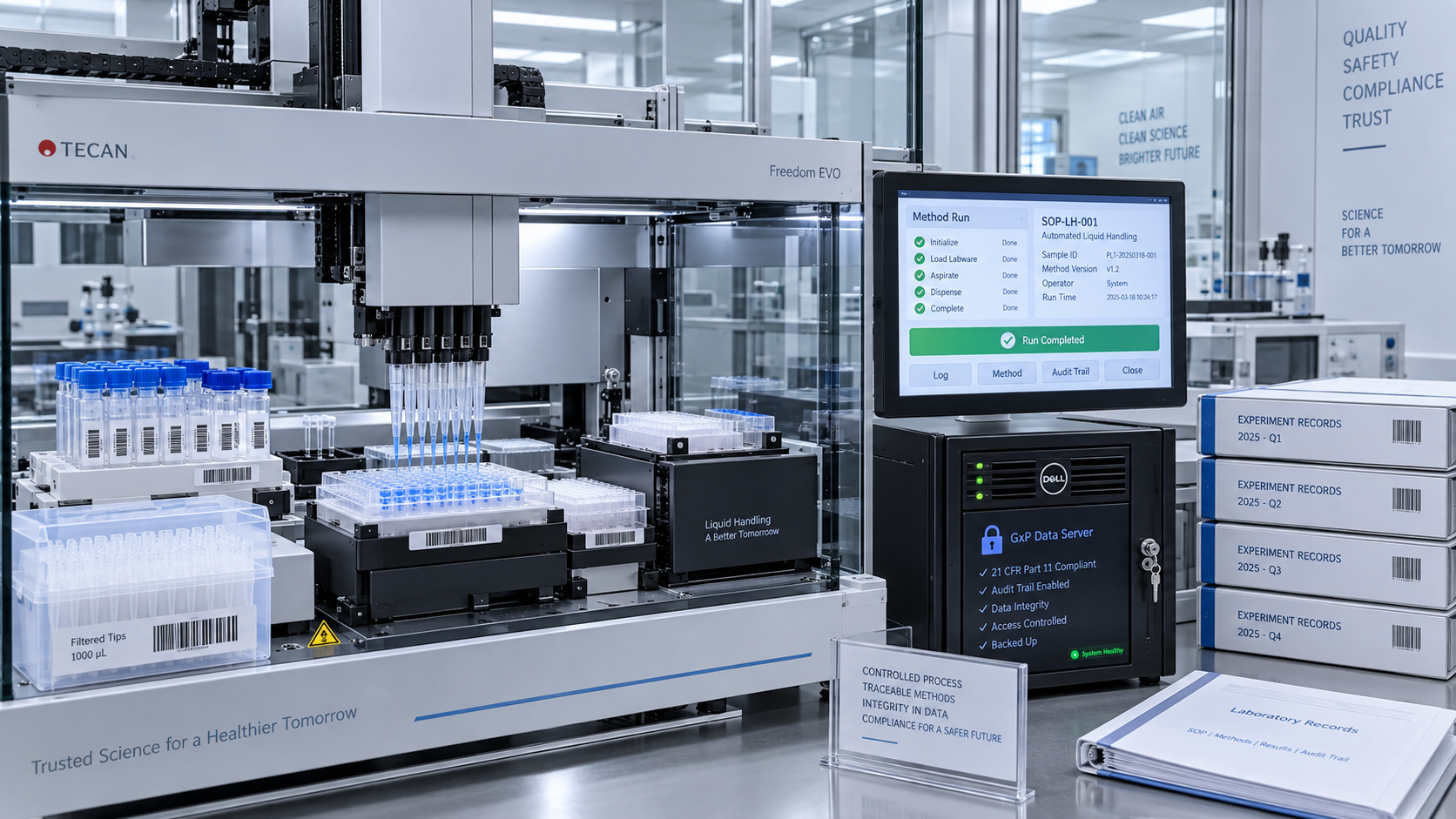
Software API Interoperability Metrics That Matter in Labs
Author
Date Published
Reading Time

For project leaders in lab-scale production and fluidic systems, software api interoperability metrics are no longer a technical side note—they are a core indicator of integration risk, data continuity, and scale-up readiness. This article examines the metrics that matter most when connecting instruments, automation platforms, and enterprise systems, helping teams reduce implementation friction and make more defensible procurement and engineering decisions.
What do software API interoperability metrics actually mean in laboratory environments?
In a lab, interoperability is not just about whether one system can “connect” to another. It is about whether data, commands, events, alarms, and audit records can move across devices and software layers without distortion, delay, or manual intervention. That is why software api interoperability metrics matter: they turn a vague integration promise into measurable engineering performance.
For project managers overseeing pilot reactors, microfluidic control systems, centrifugation platforms, bioreactors, or automated liquid handling, the practical question is simple: can the instrument API support reliable coordination with LIMS, MES, ELN, SCADA, historian platforms, and custom orchestration tools? If the answer depends on middleware workarounds, undocumented fields, or unstable endpoints, then interoperability risk is already present.
The most useful software api interoperability metrics usually cover six areas: protocol compatibility, data model consistency, command success reliability, latency, version stability, and security/compliance support. In highly regulated or precision-sensitive environments, these metrics influence qualification effort, validation cost, and future scale-up more than a feature checklist does.
Which software api interoperability metrics should project leaders prioritize first?
Not every metric deserves equal weight. In lab-scale production and fluidic-precision systems, the most important metrics are the ones that directly affect repeatability, traceability, and implementation speed. Leaders should begin with the metrics that expose operational reality rather than vendor marketing language.
1. Interface coverage rate
This measures how much of the instrument’s useful functionality is available through the API. Many systems expose read-only status data but hide control actions, method parameters, calibration settings, or event acknowledgments behind the local user interface. A high interface coverage rate means your automation layer can actually operate the system instead of merely observing it.
2. Data mapping completeness
A connection is not interoperable if sample IDs, batch numbers, timestamps, unit conventions, or alarm codes fail to map correctly. For labs handling sensitive process transitions, this metric is crucial because even minor semantic mismatches can create downstream reconciliation work, especially when moving from benchtop runs to pilot-scale execution.
3. Round-trip command reliability
This metric answers whether a command sent by one system is received, executed, and confirmed correctly by another. In automated dispensing, reactor control, or cell culture management, command reliability should be tested under normal load, peak load, and network interruption scenarios. A system with elegant documentation but weak command acknowledgment is a hidden implementation risk.
4. End-to-end latency
Latency determines how quickly a command or event travels through the integration chain. In some lab workflows, a few seconds may be acceptable. In fluidic switching, closed-loop monitoring, or synchronized sampling, latency directly influences process quality. The key is not just average latency, but maximum observed latency and variance during real workloads.
5. API version stability
Frequent breaking changes can destroy the business case of a seemingly modern API. Project leaders should track deprecation notice periods, backward compatibility, release documentation quality, and the percentage of integrations requiring rework after upgrades. Stable API governance lowers lifecycle cost.
6. Auditability and security support
For GMP-aware environments and benchmark-driven operations, authentication, authorization, immutable logging, and timestamp integrity are part of software api interoperability metrics. Security cannot be treated as separate from interoperability because a connection that bypasses access controls often becomes unusable in validated settings.
How can you compare vendors without getting trapped by generic “open API” claims?
“Open API” is one of the most overused phrases in lab technology procurement. In practice, openness may mean anything from a documented REST interface to a limited SDK, a file-drop exchange, or a paid professional services gateway. Project leaders should translate vendor language into measurable software api interoperability metrics before scoring proposals.
A strong comparison method is to ask each vendor to demonstrate the same integration scenario: instrument registration, method parameter read/write, event streaming, alarm capture, batch record linkage, and user action traceability. Then evaluate how much custom code, middleware, and vendor assistance is required. The less hidden engineering effort involved, the more credible the interoperability claim.
Which metrics matter most for lab-scale production, microfluidics, and scale-up planning?
The answer depends on the operational context. In fluidic-precision systems, very small deviations in timing or parameter transfer can produce large process effects. In pilot-scale reactors or bioreactors, broader system orchestration and audit continuity usually dominate. That is why software api interoperability metrics should be weighted by process criticality, not only by IT preference.
For microfluidic devices, event granularity, timestamp resolution, and low-latency command execution are often decisive. If a valve position update or flow adjustment reaches the supervisory layer too slowly, process reproducibility suffers. For automated pipetting and liquid handling, payload validation, unit normalization, and error-state transparency are essential because transfer logic must remain consistent across methods and users.
For bioreactors and centrifugation systems, interoperability often depends on the quality of state models and historical data capture. Teams need to know whether setpoints, sensor values, alarms, intervention logs, and recipe phases can be aligned across systems without manual stitching. During scale-up, the penalty for fragmented records becomes much higher because engineering, quality, and procurement teams all depend on the same source of truth.
A practical approach is to classify metrics into three tiers: process-critical, compliance-critical, and convenience-critical. This prevents teams from overvaluing cosmetic API features while underestimating metrics that affect validation, continuity, and production handoff.
What are the most common mistakes when assessing software api interoperability metrics?
One frequent mistake is equating protocol support with interoperability. A vendor may support OPC UA, REST, or MQTT, yet still expose incomplete tags, inconsistent units, or poorly structured responses. Protocol compatibility is necessary, but it is only one part of the interoperability picture.
A second mistake is testing only ideal scenarios. Laboratory integrations fail less often in demos than during exception handling: interrupted runs, instrument restarts, invalid payloads, duplicate sample records, or partial batch updates. Strong software api interoperability metrics should therefore include recovery behavior, retry logic, and data reconciliation quality.
A third mistake is ignoring validation and governance effort. An API that works technically but lacks stable documentation, user permission granularity, or audit log consistency can become expensive to qualify. For project leaders, the hidden cost is not just coding time. It is also revalidation time, QA review time, and change-control burden.
Another common error is separating procurement from engineering too early. Procurement teams may compare license fees or implementation packages, while engineers focus on connectivity detail. The best decisions happen when both groups score software api interoperability metrics against actual use cases, expected integration depth, and lifecycle ownership cost.
How should teams test and benchmark interoperability before purchase or deployment?
The most defensible method is a use-case-based benchmark. Instead of asking whether an instrument has an API, ask whether it can complete a defined workflow under measurable conditions. This aligns with how technical benchmarking repositories and multidisciplinary lab programs assess operational fit.
A sound benchmark usually includes four stages. First, document the target workflow: device setup, recipe transfer, sample execution, event capture, data export, and exception handling. Second, define pass/fail thresholds for software api interoperability metrics such as latency, mapping accuracy, success rate, and traceability completeness. Third, run tests with realistic payloads and network conditions. Fourth, review not only results, but also implementation effort, support responsiveness, and upgrade implications.
Teams should also benchmark API behavior across operational states: startup, steady state, maintenance mode, and fault recovery. In lab-scale production, many problems emerge not in routine execution but when systems transition between modes. If the API behaves inconsistently during these transitions, the integration may remain fragile even if baseline tests look acceptable.
When possible, create a weighted scoring matrix. For example, low-latency event handling may receive higher weight in microfluidic control, while audit completeness and schema stability may dominate in regulated bioprocess workflows. This keeps software api interoperability metrics tied to operational priorities rather than generic IT checklists.
How do software api interoperability metrics influence project timeline, cost, and long-term scalability?
Interoperability quality affects far more than initial integration. It shapes how quickly a project can move from pilot testing to validated deployment, how often middleware needs patching, and how easily new instruments can be added later. In other words, software api interoperability metrics are leading indicators of total integration economics.
If coverage is weak, teams spend more time building custom adapters. If data models are inconsistent, they spend more time on cleansing and exception handling. If versioning is unstable, future upgrades become mini-projects. These costs rarely appear fully in the purchase quote, but they emerge in engineering backlog, delayed commissioning, and unplanned vendor dependence.
Scalability is especially important for organizations moving from benchtop experimentation toward continuous or semi-continuous production. A lab API that supports one local script may not support coordinated orchestration across multiple assets, sites, or quality systems. Leaders should therefore ask whether the current interoperability design can support future replication, centralized monitoring, and enterprise data integration.
The strongest platforms usually combine clear API governance, structured event models, secure authentication, and high-fidelity data exchange. Those qualities reduce friction not only in one project, but across the full digital laboratory architecture.
What should project leaders confirm before moving forward with a vendor or internal integration plan?
Before procurement, deployment, or technical partnership decisions are made, project leaders should confirm a short list of practical points. First, which workflows truly need automation versus simple data extraction? Second, which software api interoperability metrics are non-negotiable for the process? Third, who owns data mapping, error handling, and upgrade support over the system lifecycle?
It is also wise to confirm whether the API supports validation expectations, whether documentation is detailed enough for internal engineering teams, and whether the vendor can provide evidence from similar laboratory environments. In multidisciplinary settings such as fluidic precision, reactor systems, cell culture infrastructure, centrifugation, and automated liquid handling, these questions often separate scalable solutions from expensive integration experiments.
If you need to further confirm a specific solution, parameter set, timeline, budget range, or collaboration model, prioritize these discussion points: required control depth, target systems to be connected, expected throughput, compliance constraints, event and alarm handling needs, upgrade policy, and the benchmark method used to validate software api interoperability metrics. Those answers will give procurement officers, lab directors, and engineering leads a much clearer basis for action.
Expert Insights

Chief Security Architect
Dr. Thorne specializes in the intersection of structural engineering and digital resilience. He has advised three G7 governments on industrial infrastructure security.
Related Analysis
Core Sector // 01
Security & Safety
- Testing Dilution Factor Precision and Repeatability in Automated Liquid HandlingAuthor :Lina Cloud

- How to Assess a European Liquid Handling Software Supplier for Lab AutomationAuthor :Lina Cloud

- Pipette Tip Fit for Automation: Checking Deck, Gripper, and Seal CompatibilityAuthor :Lina Cloud

- How to Evaluate an Automated Sample Dilutor Factory for Traceable Lab WorkflowsAuthor :Lina Cloud

- What Drives Liquid Handling Software Costs in Automated Laboratory Workflows?Author :Lina Cloud

- What to Verify in Validated Liquid Handling Software for GxP WorkflowsAuthor :Lina Cloud

- Selecting Automated Liquid Handling Systems for High-Throughput AssaysAuthor :Lina Cloud

- How to Validate Lab Automation Standards for Reliable, Compliant WorkflowsAuthor :Lina Cloud