Collision Avoidance Logic That Prevents Robotic Downtime
Author
Date Published
Reading Time
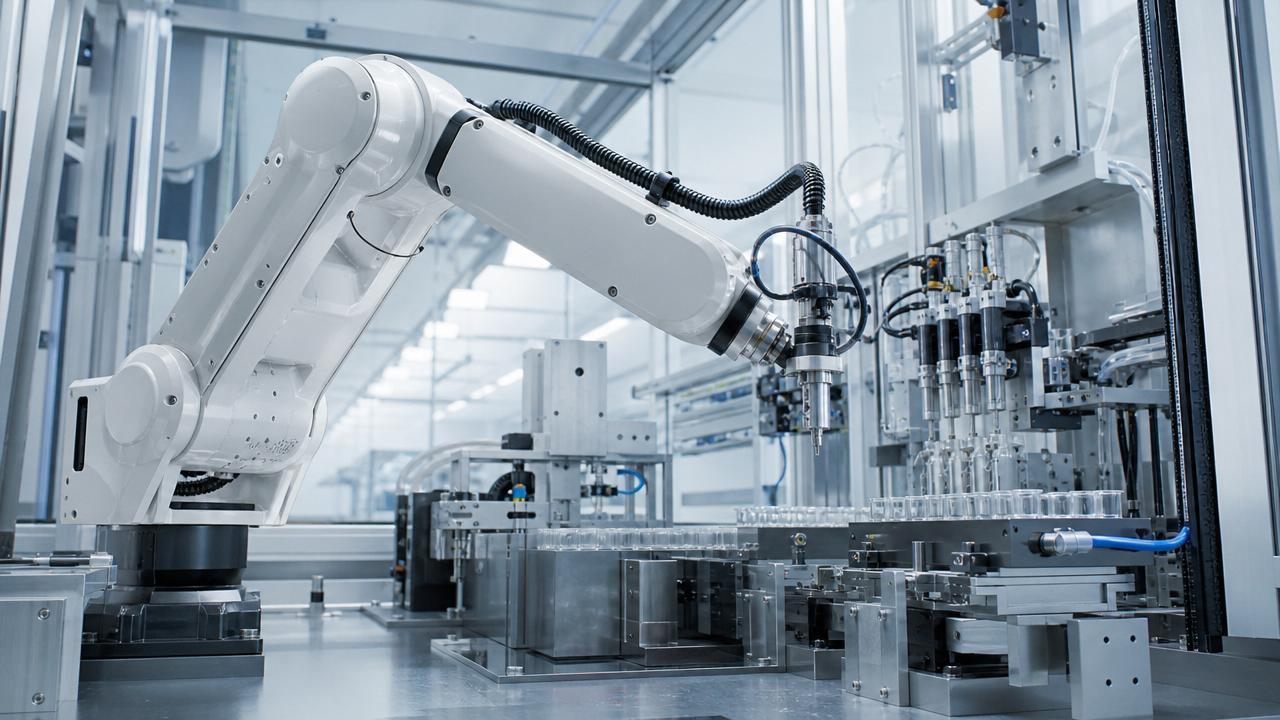
For after-sales maintenance teams, unplanned robotic stops often begin with missed warning signs in motion control. Understanding robotic arm collision avoidance logic is essential to diagnosing faults faster, reducing repeat downtime, and protecting precision equipment in high-demand lab and production settings. This article explains the core logic, common failure points, and practical service insights needed to keep robotic systems safe, stable, and continuously productive.
Why robotic arm collision avoidance logic matters more in precision lab and process environments
In pharmaceutical, chemical, microfluidic, bioprocess, and automated liquid handling applications, a robot collision is rarely a simple mechanical incident. It can disrupt validated workflows, damage calibrated dispensing heads, contaminate controlled zones, or interrupt batch-to-continuous transitions. For after-sales maintenance personnel, the real challenge is not just restarting the robot. It is identifying whether the stop originated from logic thresholds, sensor drift, axis synchronization error, payload mismatch, fixture movement, or software interlock failure.
That is why robotic arm collision avoidance logic should be treated as a service-critical control layer rather than a background safety feature. In environments where sub-microliter dosing, repeatable motion paths, and regulated documentation matter, the logic behind collision prevention directly affects uptime, asset protection, troubleshooting speed, and compliance confidence.
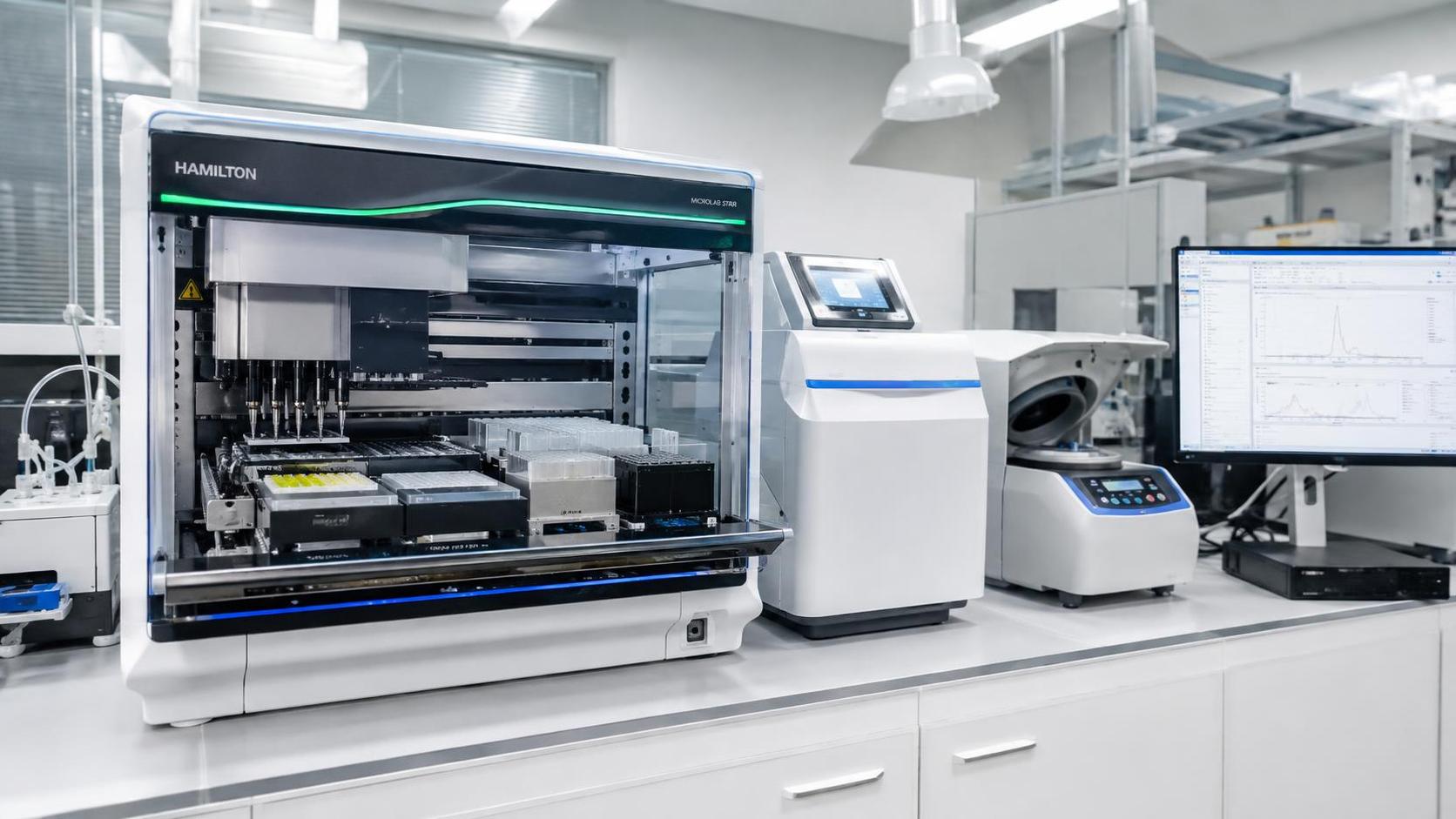
G-LSP focuses on these high-sensitivity transitions between lab-scale experimentation and industrial execution. For maintenance teams supporting bioconsistent hardware, pilot reactors, centrifugation systems, and automated pipetting platforms, the practical question is clear: how does collision avoidance logic behave under real load, real process variability, and real service pressure?
- It reduces secondary damage by stopping or rerouting motion before contact force reaches damaging levels.
- It shortens diagnosis time when fault logs, torque deviations, and path conflicts are interpreted correctly.
- It protects process accuracy in applications where even slight end-effector displacement can invalidate runs.
- It supports safer recovery procedures for service teams working around enclosed automation cells and shared workspaces.
What is robotic arm collision avoidance logic, and what does it actually monitor?
Robotic arm collision avoidance logic is the set of software rules, motion models, sensor inputs, and controller responses used to prevent contact between the arm and surrounding objects, tooling, fixtures, or people. It does not rely on one single alarm. Instead, it combines predicted motion envelopes with real-time feedback to judge whether movement remains safe, expected, and mechanically consistent.
Core monitoring layers
Most systems evaluate several layers at the same time. Understanding these layers helps maintenance teams isolate where the failure really occurred.
- Geometric path monitoring: Checks whether the commanded route intersects with restricted zones, hard limits, or known fixture boundaries.
- Torque and current monitoring: Detects abnormal resistance that may indicate contact, stiction, bearing wear, or overload.
- Speed and acceleration supervision: Verifies whether dynamic behavior remains inside configured safe windows.
- Payload model validation: Compares expected inertial behavior with the installed tool, gripper, probe, dispenser, or vessel handling component.
- External sensor input: Integrates laser scanners, proximity sensors, light curtains, encoders, and machine vision where present.
In many precision installations, robotic arm collision avoidance logic also depends on the quality of the digital setup data. If fixture coordinates, end-effector length, tray position, or reactor access geometry are wrong, the robot may be running valid code against invalid reality. Maintenance teams often encounter this after tool replacement, line changeover, or mechanical adjustment by another department.
Which failure modes trigger false stops or missed collisions?
Not every collision alarm points to an actual impact. Equally, not every damaging event is caught early enough. In service work, the most costly situations are false positives that halt output repeatedly and false negatives that allow contact before intervention.
The following table helps maintenance teams map common service symptoms to likely causes within robotic arm collision avoidance logic.
This pattern-based view is especially useful in multidisciplinary sites, where one robotic platform may interact with bioreactors, liquid handling decks, separation modules, or reactor charging stations. The fault is often at the interface, not at the robot alone.
Common service-side blind spots
- Assuming the last replaced part caused the stop, when the root issue is a reference drift introduced earlier.
- Resetting alarms without downloading trend data, which removes evidence of progressive torque deviation.
- Treating the controller and mechanical stack separately, even though collision logic depends on both.
- Ignoring process hardware movement, such as tray warpage, vessel variation, or deck tolerance shifts.
How to troubleshoot robotic arm collision avoidance logic without extending downtime
Effective troubleshooting should move from evidence preservation to controlled reproduction and then to parameter confirmation. For after-sales teams under urgent restart pressure, a repeatable workflow prevents guesswork and unnecessary parts replacement.
Recommended service sequence
- Capture the event context: Record alarm code, axis position, speed condition, active recipe, installed tool, payload data, and operator actions before reset.
- Separate actual contact from estimated contact: Look for physical witness marks, probe misalignment, cable snagging, bent brackets, or displaced consumable carriers.
- Verify reference states: Confirm homing, encoder integrity, fixture datums, tool center point, and protected zone coordinates.
- Replay at reduced speed: Use controlled simulation or low-speed execution to identify where predicted and actual paths diverge.
- Check dynamic parameters: Review jerk, acceleration, payload model, and torque threshold settings after any hardware or process change.
- Document root cause and corrective action: This prevents recurring service calls across identical platforms in different lines or sites.
In G-LSP-relevant environments, that sequence should also include process interaction review. For example, if a robot serves a single-use bioreactor or high-precision dispensing station, tubing routing, disposable format variation, and change-part tolerances may affect clearance more than the robot arm itself. A maintenance conclusion that ignores these upstream variables is often incomplete.
What parameters should maintenance teams verify after tool changes, upgrades, or line reconfiguration?
Many recurring collision alarms appear after seemingly minor modifications. A new gripper, a different pipetting head, a revised tray nest, or a reactor access frame can alter kinematics enough to invalidate previous settings. The table below summarizes the most important checkpoints linked to robotic arm collision avoidance logic.
These checkpoints are especially relevant where robotics interacts with precision fluidics and regulated hardware. A small offset that seems tolerable in general handling can be unacceptable near sterile transfer positions, microreactor interfaces, or fine-volume dispensing arrays.
How do application scenarios change the collision prevention strategy?
The best robotic arm collision avoidance logic is application-aware. A robot loading centrifuge carriers does not face the same risk profile as a robot positioning a pipetting manifold above a high-density deck. Maintenance teams should diagnose alarms in the context of the served equipment, not as generic robot issues.
Scenario differences that matter
- Automated pipetting and liquid handling: Clearance is tight, consumables vary slightly, and probe damage can occur before obvious arm collision signs appear.
- Bioreactor support systems: Tubing, bags, and single-use assemblies create dynamic obstacles that are not always rigidly modeled.
- Pilot-scale reactors and synthesis systems: Access doors, vessel geometry, and thermal shielding can alter approach paths during maintenance or batch changeover.
- Microfluidic device handling: Tooling often requires micron-level positioning consistency, making false homing or fixture tolerance drift a major trigger.
- Centrifugation and separation technology: Imbalance, carrier wear, and repetitive loading stress can shift placement repeatability over time.
This is where G-LSP’s benchmarking perspective is valuable. Looking across multiple equipment classes helps maintenance leaders understand how robot motion logic should be validated at the interface between automation and process hardware, not in isolation.
What should buyers and service managers evaluate before selecting or upgrading a collision avoidance solution?
For mixed lab-production environments, procurement and after-sales service must align early. Buying a robot with advanced collision features is not enough if logs are hard to interpret, parameter access is restricted, or tool changes require excessive recalibration. The more sensitive the process, the more important maintainability becomes.
Selection criteria that reduce lifetime downtime
- Transparent fault logging with event timestamps, axis context, and threshold references that service teams can use without vendor escalation for every event.
- Flexible tool and payload management for frequent format changeovers in lab automation and pilot-scale operations.
- Support for safe zone editing and validation when station geometry changes during process optimization.
- Compatibility with common standards and quality frameworks used in regulated production environments, such as ISO-aligned documentation practices and GMP-conscious change control.
- Availability of service documentation that links motion logic to the attached process equipment, not only to the base robot.
Where budgets are tight, teams should prioritize diagnostic clarity over feature quantity. A simpler collision prevention system with accessible logs and stable parameter handling may deliver better operational value than a more complex package that prolongs every service intervention.
Standards, compliance, and documentation: what maintenance teams should not overlook
Collision events in pharmaceutical and chemical settings can trigger more than technical downtime. They may affect deviation reports, batch traceability, equipment qualification boundaries, or change-control obligations. That makes documentation quality part of the collision avoidance strategy.
While exact requirements depend on site procedures and system scope, maintenance teams should generally ensure the following:
- Alarm histories are preserved with enough detail to support root cause review and repeat-event comparison.
- Parameter changes to robotic arm collision avoidance logic are version-controlled and linked to maintenance records.
- Mechanical modifications, fixture replacement, or tooling updates are reflected in revised setup files and validated coordinates.
- Where applicable, documentation aligns with internal quality systems informed by ISO, USP, and GMP expectations.
G-LSP’s technical benchmarking approach supports these needs by framing equipment decisions through performance consistency, process sensitivity, and regulatory awareness rather than through nominal specifications alone.
FAQ: practical questions about robotic arm collision avoidance logic
How often should robotic arm collision avoidance logic be revalidated?
Revalidation is usually advisable after tool replacement, payload change, fixture relocation, controller update, recipe speed modification, or repeated unexplained alarms. In precision environments, even small geometry changes can justify rechecking tool center point, exclusion zones, and dynamic thresholds.
Can false collision alarms indicate mechanical wear rather than control error?
Yes. Increasing backlash, bearing drag, cable resistance, coupler stiffness, or axis imbalance can alter torque signatures enough to trigger the logic. If alarms appear gradually and mostly during acceleration or deceleration, inspect the mechanical drivetrain before changing software thresholds.
What is the biggest mistake during emergency restart?
The biggest mistake is clearing the fault and retesting at full speed before capturing evidence. That can remove useful logs, worsen damage, and turn an intermittent fault into a difficult recurring issue. Reduced-speed replay and reference verification are safer first steps.
Is robotic arm collision avoidance logic enough by itself in regulated lab automation?
No. It should be part of a broader strategy that includes fixture control, sensor validation, preventive maintenance, change documentation, and application-specific benchmarking. In high-value fluidic and bioprocess systems, the interface between robot and process hardware often determines the real risk level.
Why choose us for technical benchmarking, service planning, and equipment decisions?
G-LSP supports teams that cannot afford vague answers when robotic uptime affects regulated output, fluidic precision, and scale-up continuity. Our strength is not limited to one machine category. We connect robotic arm collision avoidance logic with the broader equipment ecosystem: pilot-scale reactors, microfluidic devices, bioreactors, centrifugation platforms, and automated liquid handling systems.
If your after-sales or maintenance team is dealing with recurring robot stops, tool change instability, difficult payload validation, or uncertain station geometry, you can consult us on specific decision points:
- Parameter confirmation for tool data, payload assumptions, and motion-related alarm interpretation.
- Product and system selection for robotic interfaces used in precision dispensing, handling, or pilot-scale transfer steps.
- Evaluation of delivery constraints, changeover risks, and maintainability requirements before procurement.
- Custom solution review where standard collision logic must coexist with sensitive fluidic, sterile, or high-accuracy hardware.
- Discussion of documentation expectations tied to ISO, USP, GMP, and site-level quality procedures.
- Quote-stage technical comparison to help distinguish between nominal robot features and service-relevant long-term performance.
When downtime starts with motion uncertainty, the fastest recovery comes from better technical visibility. If you need support in assessing robotic arm collision avoidance logic within a broader precision equipment environment, G-LSP can help you compare options, identify likely root causes, and define a more stable path to continuous operation.
Expert Insights

Chief Security Architect
Dr. Thorne specializes in the intersection of structural engineering and digital resilience. He has advised three G7 governments on industrial infrastructure security.
Related Analysis
Core Sector // 01
Security & Safety
- Testing Dilution Factor Precision and Repeatability in Automated Liquid HandlingAuthor :Lina Cloud

- How to Assess a European Liquid Handling Software Supplier for Lab AutomationAuthor :Lina Cloud

- Pipette Tip Fit for Automation: Checking Deck, Gripper, and Seal CompatibilityAuthor :Lina Cloud

- How to Evaluate an Automated Sample Dilutor Factory for Traceable Lab WorkflowsAuthor :Lina Cloud

- What Drives Liquid Handling Software Costs in Automated Laboratory Workflows?Author :Lina Cloud

- What to Verify in Validated Liquid Handling Software for GxP WorkflowsAuthor :Lina Cloud

- Selecting Automated Liquid Handling Systems for High-Throughput AssaysAuthor :Lina Cloud

- How to Validate Lab Automation Standards for Reliable, Compliant WorkflowsAuthor :Lina Cloud