FDA Finalizes Syringe Pump Software Validation Guidance
Author
Date Published
Reading Time

On May 3, 2026, the U.S. Food and Drug Administration (FDA) released the final Guidance for Industry: Software Verification of Infusion Pumps, mandating IEC 62304 Class C-level full-lifecycle software validation for all syringe pump embedded control software entering the U.S. market. Enforcement begins October 1, 2026. Medical device manufacturers—especially those exporting infusion pumps from China—and regulatory affairs professionals in diagnostics, home care, and hospital equipment distribution should take note, as non-compliant models will be ineligible for 510(k) or De Novo authorization, directly affecting U.S. market access and order fulfillment.
Event Overview
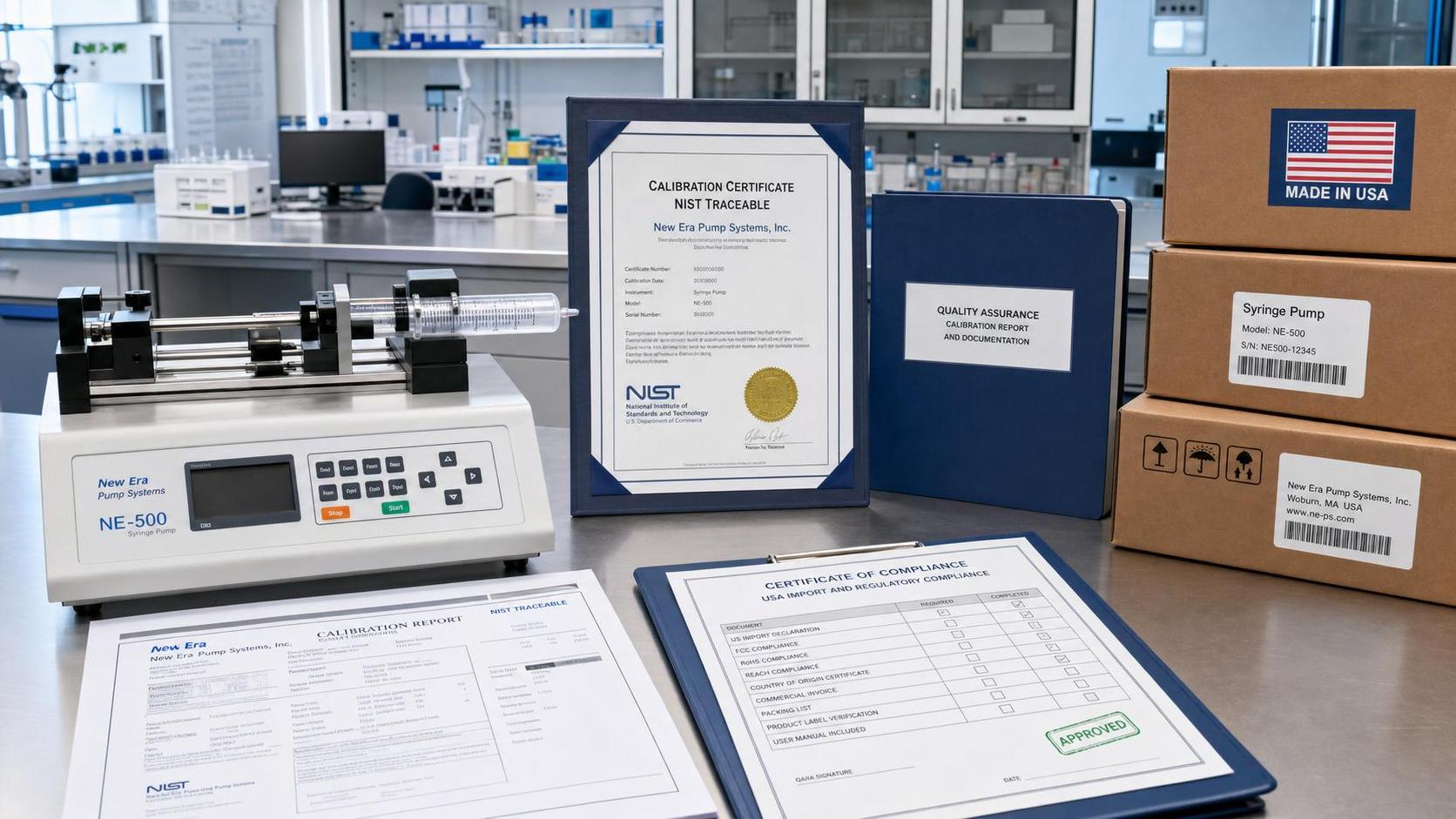
The U.S. FDA issued the final version of its Guidance for Industry: Software Verification of Infusion Pumps on May 3, 2026. The guidance requires that all syringe pumps marketed in the United States must have embedded control software validated per IEC 62304 Class C throughout its entire development lifecycle. Manufacturers must submit a fully traceable verification and validation (V&V) documentation package. The requirement becomes mandatory on October 1, 2026. For Chinese exporters, devices failing to meet this standard will not receive FDA clearance via 510(k) or De Novo pathways.
Impact on Specific Industry Segments
Direct Exporters and OEM/ODM Manufacturers
These companies are directly responsible for regulatory submission and product compliance. Because the guidance applies to devices seeking U.S. market entry, any syringe pump model intended for FDA clearance must now demonstrate Class C software validation—not just functional testing. Impact includes extended pre-submission timelines, increased internal review burden, and potential redesign of legacy software architectures lacking full V&V traceability.
Regulatory Affairs and Quality Assurance Firms
Firms supporting medical device submissions face heightened demand for IEC 62304 Class C expertise. The guidance elevates documentation expectations beyond previous FDA software guidance (e.g., General Principles of Software Validation), requiring rigorous evidence linking requirements, design, implementation, and test cases. This increases scrutiny during FDA review and may trigger more frequent information requests during 510(k) evaluation.
Distribution and Channel Partners in North America
U.S.-based distributors and channel partners handling syringe pumps—particularly those managing inventory for hospitals or outpatient clinics—may encounter delayed or canceled orders if supplier models lack updated V&V packages. Inventory planning, contract renewals, and tender responses involving FDA-cleared devices could be affected starting October 2026, especially for products launched prior to 2024 without Class C-aligned development records.
What Relevant Enterprises or Practitioners Should Focus On Now
Confirm alignment with IEC 62304 Class C across current and planned syringe pump models
Manufacturers should audit existing software development documentation for traceability, risk classification justification, and verification coverage. Models already in 510(k) review or pending submission must verify whether their V&V packages meet the new guidance’s explicit Class C criteria—not just general software validation principles.
Assess timeline implications for upcoming submissions and post-market updates
Any new 510(k) or De Novo application submitted after October 1, 2026 must include compliant documentation. Even minor software changes to previously cleared devices—such as firmware patches or UI enhancements—may now require revalidation under Class C if they affect safety-related functions. Plan for additional review time with internal QA and external consultants.
Review contracts and technical agreements with software vendors or third-party developers
If control software was developed by a subcontractor, verify contractual rights to access full V&V artifacts—including requirements specifications, architecture diagrams, unit/integration test reports, and traceability matrices. Lack of ownership or access to these documents may block FDA submission.
Editorial Perspective / Industry Observation
Observably, this guidance does not introduce new software safety concepts but formalizes and enforces a higher evidentiary threshold for Class C validation—consistent with FDA’s broader trend toward harmonization with IEC standards. Analysis shows the October 2026 enforcement date signals a transition period, not an immediate cutoff: devices with pending 510(k) applications before that date may still follow prior expectations, depending on FDA review timing. From an industry perspective, this is less a sudden regulatory shift and more a consolidation of long-anticipated expectations—making it a signal of maturing regulatory maturity in software-dependent medical devices, rather than a disruptive event. Continued monitoring of FDA’s public Q&A updates and related inspection trends remains advisable.
Conclusion
This guidance marks a procedural tightening—not a conceptual departure—in how FDA evaluates syringe pump software safety. Its significance lies in enforceability and specificity: Class C validation is no longer optional context but a defined, auditable requirement. For impacted stakeholders, the current situation is best understood as a compliance milestone requiring targeted documentation readiness—not a strategic pivot. Practical preparation, not structural overhauling, is the appropriate response at this stage.
Information Sources
Main source: U.S. FDA, Guidance for Industry: Software Verification of Infusion Pumps, final version issued May 3, 2026. Enforcement date: October 1, 2026. No supplemental policy documents or FAQs have been published as of the issuance date; ongoing updates from FDA’s Center for Devices and Radiological Health (CDRH) remain subject to observation.
Expert Insights

Chief Security Architect
Dr. Thorne specializes in the intersection of structural engineering and digital resilience. He has advised three G7 governments on industrial infrastructure security.
Related Analysis
Core Sector // 01
Security & Safety
- China Tightens Export Compliance Checks on Lab Fluid-Control DevicesAuthor :Dr. Aris Nano

- China Tightens Export Checks on Lab Fluid DevicesAuthor :Dr. Aris Nano

- China Customs Tightens Export Checks for Lab Liquid-Handling EquipmentAuthor :Dr. Aris Nano

- ECHA SVHC Update Reaches Precision Fluid DevicesAuthor :Dr. Aris Nano

- FDA Tightens Accuracy Rule for Lab Fluid DevicesAuthor :Dr. Aris Nano

- ECHA Adds 12 SVHCs Affecting Lab Fluid DevicesAuthor :Dr. Aris Nano

- How to Choose a Variable Speed Peristaltic Pump for Accurate Lab Fluid TransferAuthor :Dr. Aris Nano

- FDA Tightens Import Rules for Syringe PumpsAuthor :Dr. Aris Nano