Peristaltic Pump Flow Stability Problems That Show Up Over Time
Author
Date Published
Reading Time
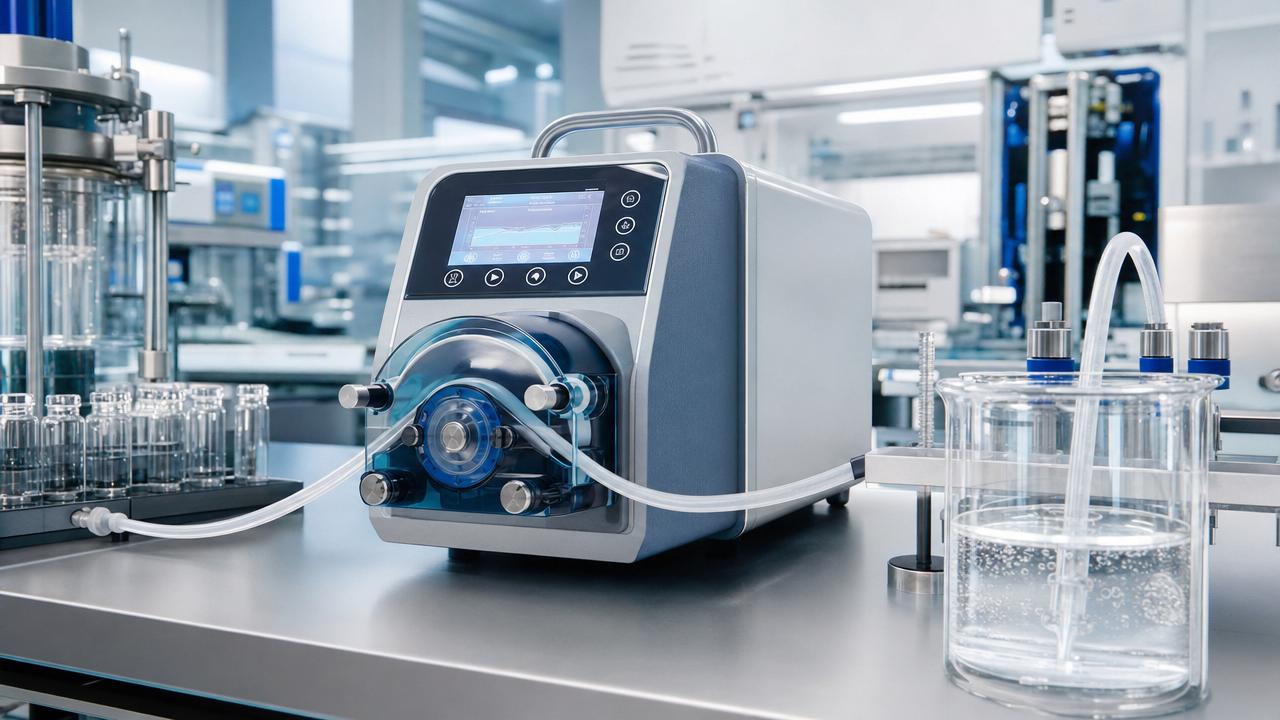
Peristaltic pump flow rate stability often declines slowly rather than failing all at once. In lab-scale production, pilot synthesis, bioprocess dosing, cell culture feed, reagent transfer, and analytical sample preparation, that slow drift can remain hidden until yield variation, concentration error, or repeatability problems appear. The practical challenge is that many flow issues seem intermittent at first, yet they usually reflect predictable wear patterns, tubing fatigue, operating condition changes, or calibration drift. Understanding how peristaltic pump flow rate stability changes over time helps maintenance teams identify the real source faster, avoid unnecessary part replacement, and restore consistent fluid handling before quality deviations expand.
When gradual instability matters most in real operating scenarios
Not every fluctuation has the same process impact. In simple utility transfer, slight pulsation may be acceptable. In contrast, in nutrient feed to a bioreactor, catalyst metering in continuous chemistry, or low-volume additive dosing in formulation work, peristaltic pump flow rate stability directly affects mass balance, residence time, and product consistency. The first useful step is to judge the scenario rather than the pump alone.
A pump delivering water for washdown can tolerate a wider deviation than one feeding shear-sensitive media to a single-use bioreactor. Likewise, a short bench test may not reveal what appears during a 12-hour circulation cycle. That is why long-duration use, critical dosing precision, fluid sensitivity, and compliance requirements should frame every troubleshooting decision involving peristaltic pump flow rate stability.
Scenario signals that deserve early attention
- Flow drift appears only after several hours of operation
- Pump speed remains unchanged, but delivered volume falls
- Batch results vary despite stable upstream settings
- Tubing looks normal externally, yet pulsation amplitude increases
- Operators compensate by raising RPM more frequently over time
In dosing and metering applications, tubing aging is often the first hidden cause
For many systems, the most common reason peristaltic pump flow rate stability deteriorates over time is tubing fatigue. Repeated compression and release changes tube elasticity, wall recovery, and internal geometry. Even before visible cracking occurs, the tubing may no longer rebound consistently after roller passage. That reduces volumetric repeatability and increases pulse variation.
This is especially important in low-flow dosing where each roller pass contributes a measurable portion of total delivery. In pharmaceutical development, fine chemical addition, and micro-batch feed applications, small changes in tubing memory can create dosage error that is not obvious in spot checks. Different tubing materials also age differently under heat, aggressive solvents, cleaning agents, and continuous duty cycles. A pump can still run smoothly while peristaltic pump flow rate stability has already shifted outside process expectations.
Practical checks for tubing-related drift
- Compare actual delivered volume against baseline at the same RPM and backpressure
- Inspect for flattening, whitening, tackiness, swelling, or uneven wall thickness
- Review tubing service hours rather than waiting for visible failure
- Confirm tubing material compatibility with fluid chemistry and sterilization routine
In continuous transfer setups, head wear and occlusion drift can slowly reshape performance
A second common scenario appears in pumps used for long-duration transfer or recirculation. Here, peristaltic pump flow rate stability may worsen because roller wear, bearing play, track deformation, or occlusion setting drift changes how the tube is compressed. If occlusion becomes too low, slip increases and delivered flow drops. If occlusion becomes too high, tubing life shortens and pulsation can worsen as the tube struggles to recover.
This is one reason a recently serviced pump sometimes performs better immediately, then slowly returns to unstable behavior. The issue may not be the motor at all, but a mechanical compression geometry that is no longer uniform across the pump head. In multi-channel systems, the imbalance becomes even more critical because one channel may lose accuracy before others, creating false assumptions about the whole setup.
Mechanical indicators that affect flow consistency
- Uneven tubing marks after operation
- Different channel outputs under identical conditions
- Noise, vibration, or periodic pulse changes during rotation
- Frequent need to re-adjust occlusion to maintain target flow
In bioprocess and sensitive fluid handling, fluid properties can change faster than expected
Sometimes the pump is mechanically sound, yet peristaltic pump flow rate stability still declines because the fluid itself changes over time. Viscosity shifts, gas entrainment, temperature rise, crystallization, protein buildup, or particulate loading can alter how the fluid moves through the tubing. In cell culture feed or enzymatic media handling, even moderate temperature movement can affect flow enough to distort long-run delivery totals.
Gas bubbles are particularly misleading. They can create apparent under-delivery, irregular pulse patterns, and noisy flow readings while the pump speed remains steady. In chemical synthesis support, solvent evaporation or dissolved gas release may gradually change fluid compressibility. In these cases, restoring peristaltic pump flow rate stability requires checking the full fluid path, not only the drive system.
How different operating scenarios change the troubleshooting priority
What to do when the flow seems stable in short tests but fails over long runs
A short confirmation test can hide the real problem. Many teams verify output for one or two minutes, find the average acceptable, and overlook the fact that peristaltic pump flow rate stability declines only after thermal buildup, tubing relaxation, or fluid conditioning changes. Long-run validation is therefore essential whenever the real process lasts significantly longer than the bench test.
A more reliable approach is to measure output at multiple intervals under realistic backpressure, temperature, and fluid conditions. If the first reading is correct but the fourth or fifth interval drifts, the pattern itself becomes diagnostic. Stable startup with late-stage flow loss often points to tubing recovery issues or changing fluid properties. Immediate inconsistency is more often linked to installation, head setup, or trapped air.
Recommended validation routine
- Record baseline flow at defined RPM, tubing lot, and fluid temperature.
- Repeat measurement over the full expected process duration.
- Check delivered mass or volume at fixed intervals, not only total end volume.
- Document backpressure, suction lift, and any visible bubbles.
- Compare results after tubing change and after head adjustment separately.
Common misjudgments that delay recovery of peristaltic pump flow rate stability
Several recurring mistakes slow down troubleshooting. One is assuming stable motor speed guarantees stable flow. Another is replacing tubing without reviewing whether the new tube specification matches the original wall thickness and hardness. A third is ignoring suction-side restrictions, partially clogged filters, or downstream pressure changes that make the pump appear unstable when the root cause lies elsewhere.
It is also common to treat pulsation and flow drift as the same problem. They may be related, but not always. Pulsation can be inherent to pump design, while declining average output over time usually points to mechanical wear, tubing change, or fluid behavior. Separating these symptoms improves diagnostic speed and protects peristaltic pump flow rate stability more effectively.
Scenario-based actions that restore stable performance more reliably
- Tubing-limited scenarios: shorten replacement intervals, qualify compatible materials, and store tubing under controlled conditions.
- Mechanical-wear scenarios: inspect roller condition, verify occlusion, and compare multi-channel uniformity during preventive maintenance.
- Fluid-sensitive scenarios: control temperature, reduce bubble entry, and review whether viscosity changes during residence time.
- Compliance-driven scenarios: maintain traceable flow verification records and define action limits before deviations affect product quality.
For organizations bridging bench-scale work and production intent, the most effective strategy is to build peristaltic pump flow rate stability into lifecycle maintenance rather than waiting for visible failure. A structured record of tubing hours, calibration history, fluid compatibility, and long-run verification trends can reveal degradation early and reduce avoidable process variation. If repeated drift appears under the same operating scenario, the next step should be a full review of tubing selection, pump head condition, and actual process conditions instead of isolated part swaps. That approach restores stable delivery faster and supports more dependable scale-up, validation, and routine operation.
Expert Insights

Chief Security Architect
Dr. Thorne specializes in the intersection of structural engineering and digital resilience. He has advised three G7 governments on industrial infrastructure security.
Related Analysis
Core Sector // 01
Security & Safety
- Precision Dispenser Pricing: Cost Drivers and Budgeting for Lab AutomationAuthor :Dr. Aris Nano

- China Tightens Export Compliance Checks on Lab Fluid-Control DevicesAuthor :Dr. Aris Nano

- China Tightens Export Checks on Lab Fluid DevicesAuthor :Dr. Aris Nano

- China Customs Tightens Export Checks for Lab Liquid-Handling EquipmentAuthor :Dr. Aris Nano

- ECHA SVHC Update Reaches Precision Fluid DevicesAuthor :Dr. Aris Nano

- FDA Tightens Accuracy Rule for Lab Fluid DevicesAuthor :Dr. Aris Nano

- ECHA Adds 12 SVHCs Affecting Lab Fluid DevicesAuthor :Dr. Aris Nano

- How to Choose a Variable Speed Peristaltic Pump for Accurate Lab Fluid TransferAuthor :Dr. Aris Nano