ISO Standards Gaps That Delay Lab Equipment Qualification
Author
Date Published
Reading Time
- Lab-Scale Production
- Fluidic-Precision
- Bioprocess Engineering
- Pilot-Scale Reactors
- Synthesis Systems
- Precision Microfluidic Devices
- Bioreactors
- Cell Culture Infrastructure
- Separation Technology
- Automated Pipetting
- Liquid Handling Systems
- Glass-Lined Stirred-Tank Reactors
- Sub-Microliter Precision Dispensers
- Multi-Sensory Lab Centrifuges
- ISO Standards
ISO Standards gaps can quietly derail every R&D-to-Production Transition, especially in Lab-Scale Production where Fluidic-Precision, Bioprocess Engineering, and qualification readiness define speed and compliance. From Glass-Lined Stirred-Tank Reactors to Sub-Microliter Precision Dispensers and Multi-Sensory Lab Centrifuges, overlooked alignment issues often trigger costly delays, revalidation, and procurement risk.
Where ISO Standards Gaps Usually Start in Lab Equipment Qualification
Many qualification delays do not begin during IQ, OQ, or PQ. They start earlier, when procurement teams, project managers, and quality stakeholders assume that a device labeled as compliant is automatically suitable for the intended process environment. In practice, the gap often sits between general equipment conformity and application-specific qualification evidence.
In lab-scale production, this problem is amplified because equipment must bridge two worlds at once: experimental flexibility and regulated repeatability. A microfluidic pump, single-use bioreactor, or laboratory centrifuge may perform well in bench testing, yet still create qualification delays if documentation packages, calibration logic, material traceability, or software records do not align with the site’s validation framework.
For most B2B teams, the highest-risk period is the first 2–4 weeks after supplier selection. That is when user requirement specifications are compared against manuals, factory test records, certificates, and installation constraints. If critical ISO-related expectations were not defined up front, the project timeline usually absorbs the penalty through rework, change control, or additional vendor clarification cycles.
G-LSP focuses on this exact transition point. By benchmarking lab-scale production hardware against ISO, USP, and GMP-relevant expectations across five industrial pillars, it helps technical and commercial teams detect documentation gaps before they become commissioning delays.
Why “compliant” is not the same as “qualification-ready”
A compliant component may meet a manufacturing or safety standard, but qualification-ready equipment must also support controlled installation, verified operation, and reproducible performance under defined site conditions. That difference matters for fluid-contact surfaces, software access levels, alarm handling, cleaning procedures, and calibration intervals.
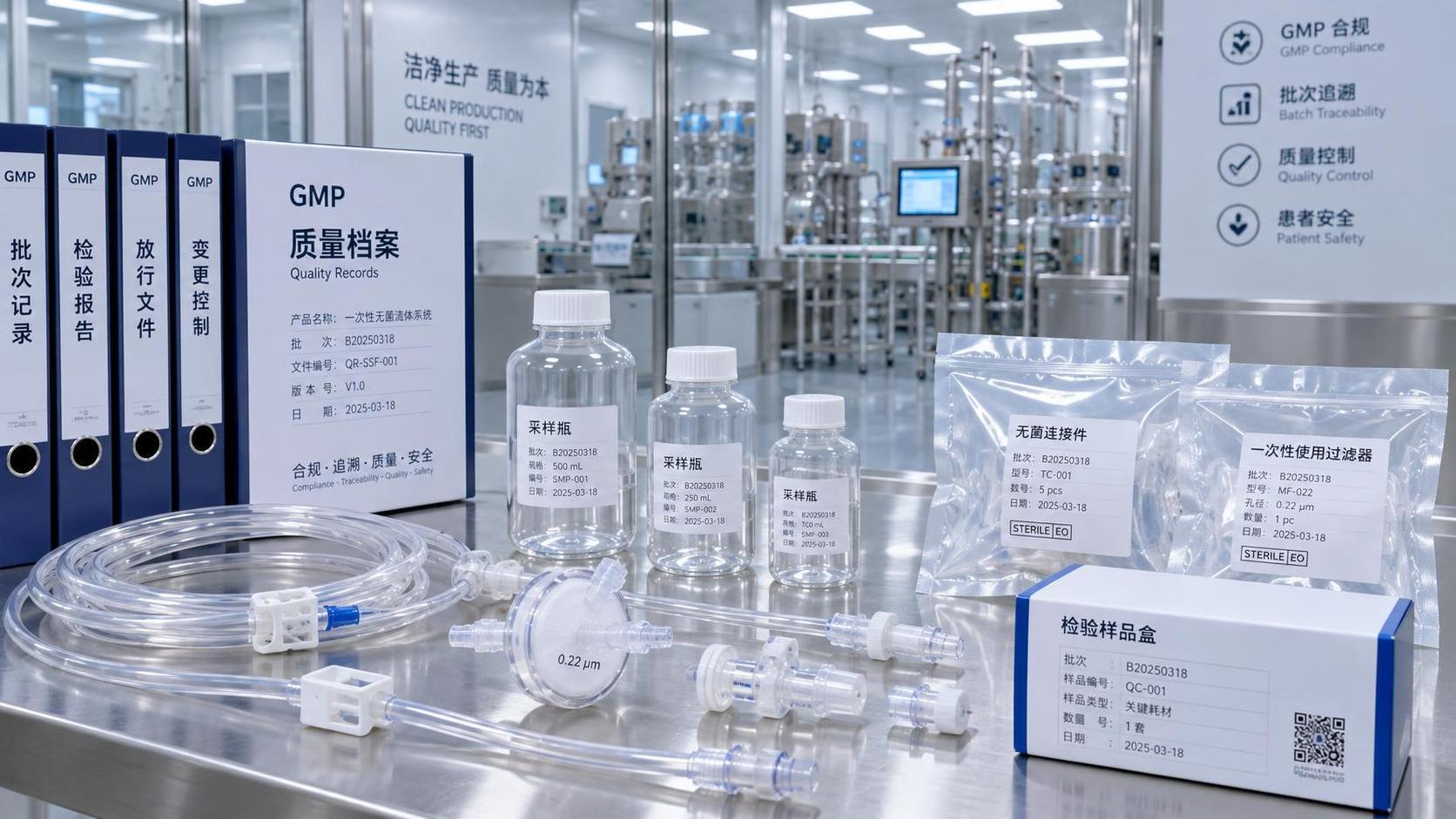
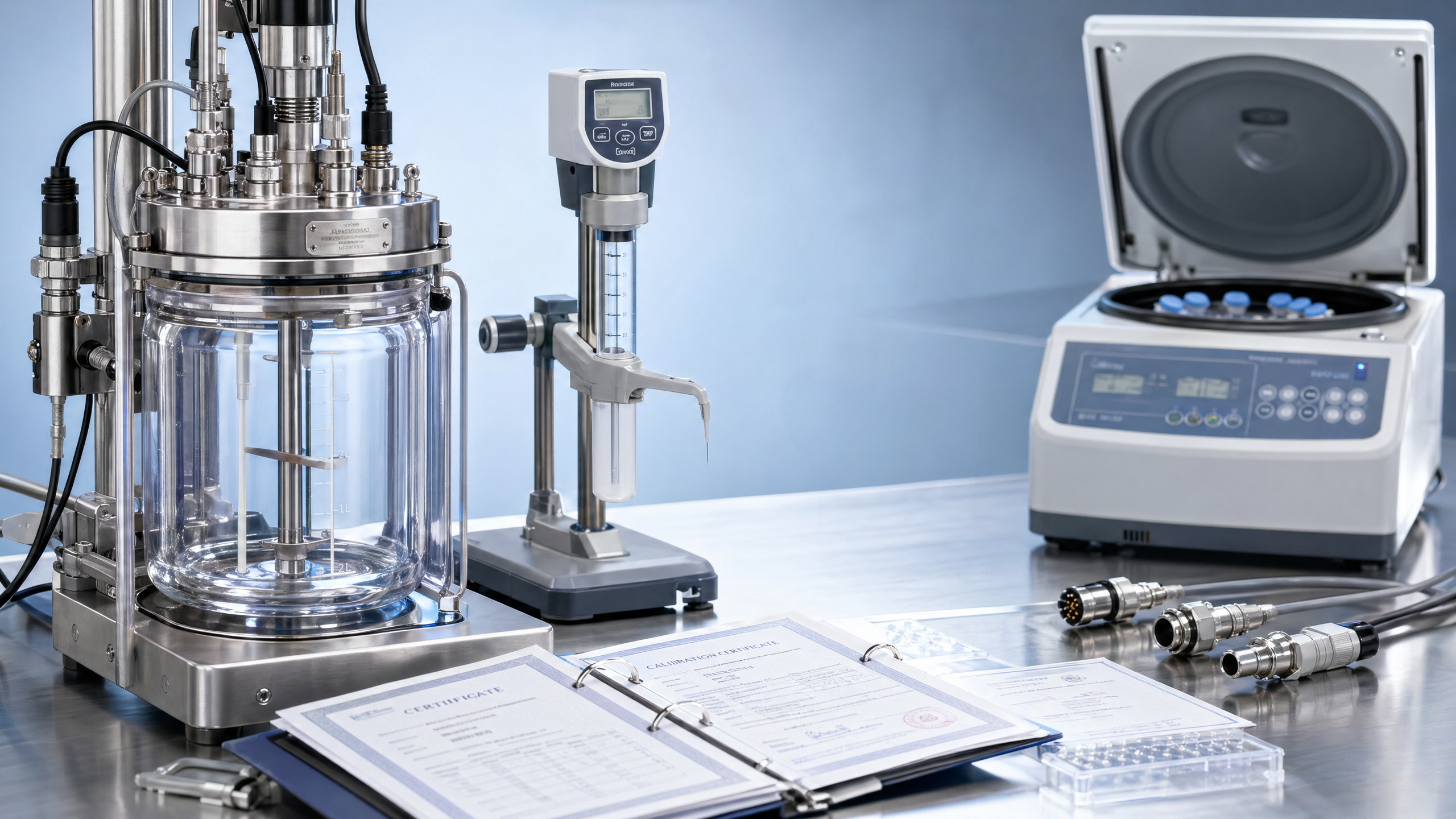
For example, a reactor system may be structurally suitable, yet still delay qualification if weld records, surface finish declarations, gasket material data, or sensor calibration certificates are incomplete. The same applies to automated pipetting systems where accuracy claims exist, but traceable test methods or environmental operating ranges are not clearly documented.
- Procurement teams often focus on price, lead time, and headline specifications, while qualification depends on document completeness, change traceability, and testability.
- Quality teams typically need 4 core evidence types: material declarations, calibration records, software control details, and factory acceptance documentation.
- Engineering teams must confirm utility compatibility, installation tolerances, and operating ranges before equipment arrives on site.
When these streams are disconnected, ISO standards gaps become visible too late. That is why qualification should be treated as a procurement input, not a post-purchase administrative task.
Which Standards & Certification Mismatches Cause the Most Delays?
Not every standards issue has the same impact. In lab equipment qualification, delays usually come from mismatches between expected documentation depth and actual supplier deliverables. This is especially common in projects involving precision dosing, cell culture infrastructure, separation systems, and pilot-scale synthesis platforms.
The table below highlights common ISO standards gaps that affect qualification planning across multidisciplinary lab-scale production environments. The goal is not to treat ISO as a checkbox, but to identify where missing alignment typically creates schedule friction, technical uncertainty, or regulatory exposure.
These mismatches are common because many suppliers optimize around shipment readiness, while users require qualification readiness. The distinction is crucial in regulated or semi-regulated environments where the equipment must support both process performance and inspection-level documentation.
For information researchers and business evaluators, the practical lesson is simple: ask for the document index before final approval. If a supplier cannot define what is included in the qualification support package, the project should assume added effort, longer review cycles, or downstream retesting.
High-risk categories across G-LSP’s five industrial pillars
The same standards gap appears differently across equipment classes. Reactors often struggle with material traceability and sensor mapping. Microfluidic devices may face challenges in flow verification and dead-volume characterization. Bioreactor platforms often require tighter alignment on single-use assemblies, control loops, and environmental monitoring logic.
Centrifugation systems frequently raise questions around rotor identification, speed verification, imbalance protection, and maintenance intervals. Automated liquid handling systems, meanwhile, can become validation-heavy due to software layers, deck configuration control, and pipetting accuracy verification across multiple volume bands such as sub-microliter, 1–10 µL, and 10–1000 µL workflows.
This is why benchmark-driven technical review matters. G-LSP’s value is not limited to comparing performance specifications. It connects equipment architecture, process demands, and documentation expectations so that procurement and quality teams can make decisions with fewer hidden qualification assumptions.
How to Evaluate Qualification Readiness Before You Place the Order
The most effective way to prevent ISO standards gaps is to convert qualification requirements into pre-award evaluation criteria. This helps project owners avoid a common pattern: selecting technically impressive equipment, then discovering that the documentation, software controls, or factory testing package does not support the intended validation path.
For capital equipment and precision lab systems, buyers should review at least 5 core dimensions before purchase approval: intended use alignment, documentation depth, calibration strategy, software governance, and service support during IQ/OQ. These dimensions usually have more influence on launch timing than minor differences in nominal throughput.
The next table provides a practical qualification-readiness matrix for procurement and project planning. It is especially useful for enterprise decision-makers comparing multiple vendors across pilot reactors, bioreactors, centrifuges, and automated liquid handling platforms.
A structured review like this creates better purchasing discipline. It also reduces the burden on quality and engineering teams, who otherwise spend valuable time recovering missing information after the equipment is already committed.
A 4-step prequalification workflow
- Define process-critical functions. Identify 3–7 attributes that directly affect product quality, such as temperature control, dosing accuracy, rotor speed, or sterile boundary integrity.
- Map standards and evidence. Translate each critical attribute into required certificates, test records, material declarations, and operating limits.
- Review vendor package completeness. Compare quote, manuals, FAT scope, and software notes against the user requirement specification before PO release.
- Assign acceptance owners. Confirm whether procurement, engineering, automation, and quality each have defined signoff responsibilities within a 2–3 stage review plan.
This workflow is especially effective in global organizations where purchasing, site engineering, and quality review are distributed across different teams. It reduces handoff ambiguity and makes qualification readiness measurable earlier in the project lifecycle.
What project managers should flag early
Project managers should treat lead time and qualification support as one package, not two separate topics. An 8-week equipment lead time can still become a 12-week deployment if the site needs another 2 weeks for documentation reconciliation and 2 weeks for supplementary testing. Hidden schedule expansion is one of the most common commercial surprises in lab-scale production projects.
This is also where G-LSP’s benchmarking approach helps. By comparing equipment not only on process capability but also on documentation maturity and standards alignment, decision-makers gain a more realistic picture of deployment risk, total effort, and qualification burden.
Scenario Analysis: How Gaps Affect Reactors, Bioreactors, Centrifuges, and Liquid Handling Systems
Different equipment families fail qualification for different reasons. A reactor may be delayed by utility mismatch, a bioreactor by single-use assembly traceability, a centrifuge by maintenance or safety record gaps, and a liquid handling platform by software validation concerns. Understanding these patterns helps both researchers and enterprise buyers choose the right review depth.
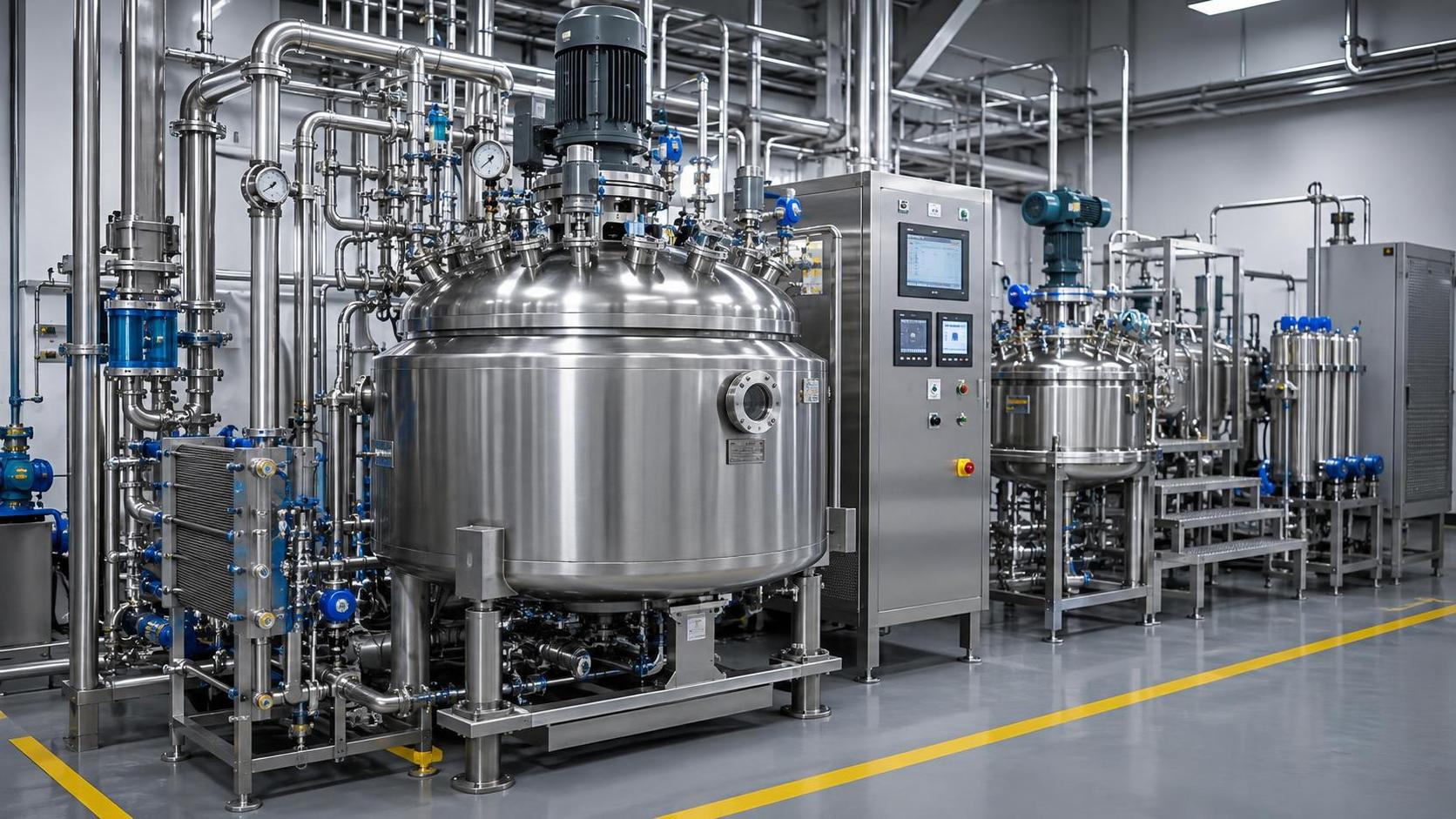
In pilot-scale reactors and synthesis systems, key review points usually include contact materials, agitation range, pressure and temperature instrumentation, and cleaning compatibility. Qualification problems often surface when the process needs a tighter control band than the factory test package demonstrates, for example narrow temperature stability over extended runs of 8–24 hours.
For bioreactors and cell culture infrastructure, delays are frequently linked to control loop documentation, gas delivery verification, filter integrity handling, and consumable change records. In single-use environments, buyers also need clarity on lot traceability, shelf-life management, and change notification practices, all of which influence qualification maintenance after initial startup.
Centrifugation and separation technology brings a different set of concerns. Here, speed verification, rotor traceability, imbalance controls, and preventive maintenance intervals are often as important as throughput. A missing maintenance plan can create operational restrictions even if the initial installation succeeds.
Why microfluidics and automated pipetting face special scrutiny
Precision microfluidic devices and automated pipetting systems are highly sensitive to small deviations. In these categories, ISO standards gaps often appear in test method definition rather than hardware design alone. If accuracy, repeatability, dead volume, or channel uniformity are not measured with traceable methods, buyers may struggle to defend qualification decisions later.
This is particularly relevant for sub-microliter dispensing, where environmental conditions, liquid properties, and tip or channel architecture can shift performance outcomes. A supplier’s brochure claim may not match the site’s fluid viscosity, assay sensitivity, or throughput pattern. Qualification therefore requires realistic operating scenarios, not generic test statements.
- Ask whether performance verification covers your actual volume range, such as below 1 µL, 1–10 µL, or 50–200 µL workflows.
- Confirm if environmental assumptions, such as temperature or humidity ranges, are defined for accuracy testing.
- Review how software-controlled methods, recipe edits, and operator permissions are documented for auditability.
These details directly influence qualification speed. They also explain why cross-functional evaluation is essential. In advanced lab-scale production, procurement cannot assess readiness alone; input from engineering, QA, automation, and end users is necessary to avoid late-stage surprises.
Common Misconceptions, Risk Triggers, and What to Do Next
One common misconception is that qualification delays are mainly caused by internal review bottlenecks. Internal review does matter, but many delays are rooted in incomplete supplier alignment. If the equipment package arrives without the right calibration records, software notes, material declarations, or FAT evidence, no amount of internal efficiency can fully recover the lost time.
Another misconception is that standards review should happen only for large production assets. In reality, lab-scale systems can create equally serious downstream problems because they often support process development, comparability studies, or pre-scale-up decision making. A qualification gap in a benchtop or pilot platform can affect data continuity across the entire development chain.
For most organizations, the smartest next step is to define a qualification-readiness checklist tied to equipment category and intended use. This should include 6 core checks: standards relevance, document package scope, calibration traceability, software controls, service support, and change notification expectations. Teams that formalize these checks early usually make faster and more defendable buying decisions.
G-LSP is built for that decision environment. Its multidisciplinary benchmarking perspective helps stakeholders compare systems across performance, compliance alignment, and implementation risk, not just purchase price or catalog features. That matters when the cost of delay includes revalidation, procurement revision, and postponed process milestones.
FAQ: qualification and procurement questions buyers often ask
How early should ISO standards alignment be reviewed?
Ideally before vendor shortlisting is finalized. A review during the RFQ or technical bid stage is much more efficient than after purchase order release. Even a 60–90 minute cross-functional review can identify whether the supplier’s package is likely to support IQ/OQ without major supplementation.
What documents matter most for lab equipment qualification?
The most important documents typically include equipment manuals, wiring or utility diagrams where relevant, calibration certificates, material contact declarations, FAT or commissioning records, spare parts lists, and software function notes. The exact set varies by system, but these documents usually form the baseline package.
Are qualification-ready systems always more expensive?
Not always in purchase price, but they are usually more transparent in total deployment effort. A lower-cost option may become more expensive if it adds 1–3 weeks of document recovery, duplicate site testing, or additional validation support. Total cost should include schedule risk, engineering hours, and change-control burden.
Which teams should participate in selection?
At minimum, procurement, process or application owners, engineering, and quality should be involved. For software-enabled systems, automation or CSV stakeholders should also review requirements. A 4- or 5-party review structure is common for equipment that affects critical process data or regulated workflows.
Why Choose Us for Qualification-Focused Equipment Benchmarking
G-LSP supports decision-makers who cannot afford vague comparisons or late-stage qualification surprises. Our strength is the ability to connect fluidic precision, bioprocess engineering, and procurement evaluation across five industrial pillars, from pilot-scale reactors and bioreactors to centrifugation platforms and automated liquid handling systems.
We help information researchers, commercial evaluators, quality leaders, and project owners assess more than vendor claims. Our benchmarking perspective focuses on intended use, standards alignment, documentation maturity, and implementation practicality so your team can compare options with a clearer view of qualification risk.
You can contact us for targeted support on parameter confirmation, equipment selection logic, typical delivery windows, documentation package expectations, qualification planning, custom scenario comparison, and quote-stage compliance questions. If you are reviewing microfluidic devices, bioreactors, centrifuges, reactors, or precision dispensing systems, we can help structure the evaluation before delay costs accumulate.
If your current project involves a difficult R&D-to-Production transition, share the intended process window, equipment category, and qualification expectations. We can help you identify likely ISO standards gaps, clarify what to request from suppliers, and prioritize the technical checks that matter most before procurement moves forward.
Expert Insights

Chief Security Architect
Dr. Thorne specializes in the intersection of structural engineering and digital resilience. He has advised three G7 governments on industrial infrastructure security.
Related Analysis
Core Sector // 01
Security & Safety
- Regulatory Compliance gaps that delay pharma launchesAuthor :Dr. Elena Carbon

- Pharmaceutical Process Improvement: Reducing Batch Variability Without Delaying Scale-UpAuthor :Dr. Elena Carbon

- Selecting Bioprocessing Modules for Scalable Upstream and Downstream WorkflowsAuthor :Dr. Elena Carbon

- Agricultural Processing Equipment Prices: What Buyers Should Compare Beyond the QuoteAuthor :Dr. Elena Carbon

- Wholesale Mechanical Seals: A Buyer’s Checklist for Materials, Duty, and Supplier QualityAuthor :Dr. Elena Carbon

- How to Qualify a GMP Compliance Supplier for Critical Lab ConsumablesAuthor :Dr. Elena Carbon

- Comparative Technical Benchmarking: Which Metrics Matter for Laboratory Platform Selection?Author :Dr. Elena Carbon

- How to Compare Reactor System Suppliers for Scale-Up, Compliance, and Total CostAuthor :Dr. Elena Carbon